A logo tells people who made it. A number tells your team exactly which item they are dealing with.
That need for individual identification is what makes numbering machines useful. They add identifiers that staff can match to inspection, production, or service records, so choosing the right machine depends on both the material being marked and the number format your system requires.
That focus on individual identification also separates numbering from branding. While branding irons can reproduce a logo, numbered marks distinguish one product from another. That difference becomes important when your team needs to trace the history of a specific item.
Once you know what needs to be marked, you also need to consider how often you will need to do so. Frequent production marking puts different demands on a numbering machine than occasional document numbering, so usage volume should factor into your choice from the start.
What Is A Numbering Machine, and How Does It Support Traceability?
A numbering machine applies numbers through ink printing or indentation. Staff then use those numbers to find the records for the marked items.
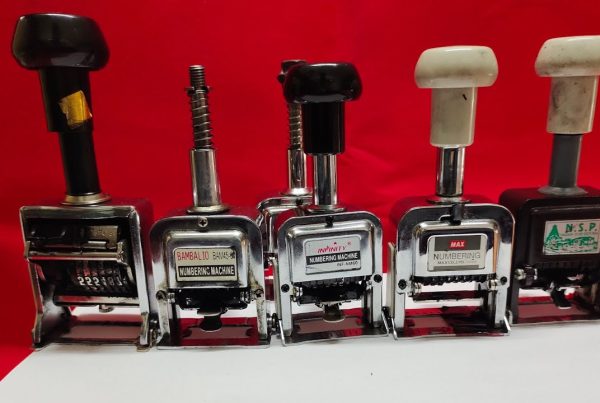
On wheel-based models, selectable character wheels control the number being applied. Depending on the model, the machine holds the selected number or advances it after a set number of impressions.
For example, an equipment supplier could stamp 004281 on an aluminum tag and enter that number in its maintenance register. During servicing, a technician could search the number to find the equipment’s history.
In manufacturing, the type of identifier depends on what your team needs to trace. A unique serial number distinguishes one component within your system, whereas a batch number groups components from the same production run.
Beyond production, inventory teams use identifiers on stock labels, while document control uses them to match related paperwork. For example, a report and its retained copy can carry the same reference number.
In each case, traceability depends on accurate records. GS1 explains that traceability requires businesses to identify items and capture the information linked to them. Your team must therefore maintain the records associated with each numbered mark.
Why Does Traceability Matter for Businesses?
Traceability helps your team investigate problems and retrieve records without guessing which item they are concerned about. When those marks match the recorded information, teams can use them across 6 practical tasks.
- Staff distinguish similar products using their individual identifiers.
- Production teams find the batches connected to reported defects.
- Warehouse staff check stock against the correct inventory entries.
- Technicians locate documents for the equipment they service.
- Inspectors connect quality-control results to the relevant parts.
- Administrators match related records without relying on product descriptions alone.
Which Numbering Machine Type Suits Your Work?
The right type depends on whether your job needs an ink mark or an indentation. The 4 groups of numbering machines below differ in marking method and number adjustment.
| Numbering machine type | Best for | Main advantage | Considerations |
| Self-inking numberer | Documents and suitable labels | Integrated ink pad | Check repeat settings and ink compatibility |
| Rubber-face case marker | Compatible packaging surfaces | A flexible printing face | Match character size and ink to the packaging |
| Electronic inkjet marker | Variable codes on compatible materials | Programmable print content | Check cartridge suitability and available print area |
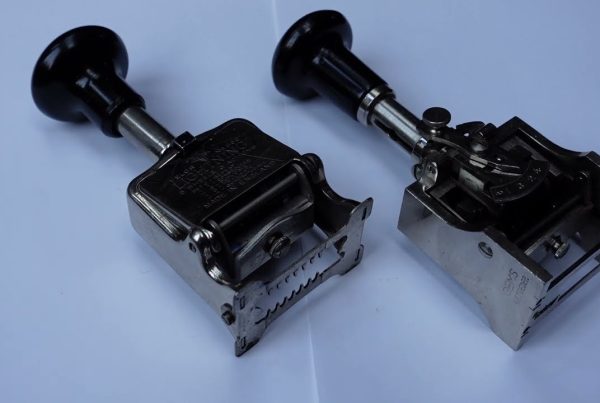
| Indenting numbering head | Suitable metal parts and tags | Recessed characters | Check material hardness and required stamping force |
Automatic describes number advancement on many hand stamps. The operator still presses the handle for each impression, so the machine reduces number adjustments while the physical stamping work remains manual. Self-inking, however, describes ink delivery between impressions. Automatic feeding is separate again and requires its own mechanism.
Which Numbering Sequence And Format Do You Need?
The sequence must match how your records identify each item or batch. Bringing a written sample code also helps your supplier confirm the 6 settings needed to reproduce that sequence.
- A sequential setting advances to the next number after each impression.
- A repeat setting holds the same number across the required copies or throughout a batch.
- The starting value continues your existing series without reusing an identifier.
- The wheel count must provide enough positions for every digit and fixed character.
- If the sequence needs to increase by more than one, confirm that the machine supports the required increment; repetition settings only control how many times a number repeats.
- Prefixes and separators need suitable character wheels or programmable text.
The total number of digits does not always match the number that advances automatically. Before ordering, confirm which wheels advance and which characters your operator must change manually as the sequence progresses.
What Character Size and Digit Capacity Do You Need?
Character size must keep the mark readable, while digit capacity must cover your complete code. Because both determine whether the full imprint fits and stays legible, the sample imprint should pass these 5 checks.
- The character height remains readable on the intended surface.
- The machine has enough digits for your expected sequence and future sequence growth.
- The full imprint fits the available area, including prefixes and spaces.
- Readers can distinguish the digits from the usual viewing distance under workplace lighting.
- The printed format matches your records, including any required leading zeros.
How Does the Material Affect Machine Selection?
Your material determines whether ink printing or indentation suits the item. Testing a sample also helps you confirm whether a machine can meet the 6 material and surface requirements below.
- Metal needs ink intended for its finish, including any coating, or a suitable indenting tool.
- Plastic samples need testing to show whether ink adheres or stamping causes damage.
- Wood and other porous surfaces need testing for ink spread.
- Flat surfaces simplify contact, while curved parts may need tooling that follows their shape.
- For hard materials, ask the supplier to confirm the required tooling and stamping force.
- Recessed areas need enough clearance for the marking head and the part holder.
How do Volume and Frequency Affect the Choice?
Higher volumes make handling time and operator effort more important. A trial covering the whole job, from positioning the item to checking the mark, helps you assess these 6 workload factors.
- Occasional jobs favor a tool that needs little setup after storage.
- Small production runs benefit from quick changes between codes.
- For repetitive work, automatic advancement reduces manual number changes when every item needs a new number.
- High-volume work requires a tested marking rate that keeps pace with production.
- Operators should assess hand strain and loading effort during a realistic trial.
- Sequential runs need a restart procedure so the next number remains correct after a stop or restart.
Frequent use also means more frequent pad or cartridge replacement. Checking supply availability before ordering helps prevent avoidable pauses between jobs.
How can Marks Remain Readable Over Time?
Marks remain readable when the marking method withstands the item’s expected wear and exposure. A sample trial should confirm that the mark remains readable under these 6 conditions.
- The mark remains readable throughout the item’s required service life.
- Routine handling and abrasion do not wear away or distort the characters.
- Moisture and cleaning chemicals do not make the identification unreadable.
- Operating temperatures do not damage the mark or surrounding surface.
- Similar digits remain easy to distinguish after testing, including 3 and 8.
- Any planned painting or coating leaves the number legible after application.
How Do Numbering Needs Differ by Application?
A production batch needs a shared code, while an equipment tag needs an individual asset reference. The examples below show how the intended record changes the marking requirement.
| Application | Traceability need | Numbering considerations |
| Manufactured parts | Individual production history | Serial sequence; suitable marking method |
| Production batches | Shared batch record | Repeat function; controlled changeover |
| Inventory tags | Stock identification | Existing code format; readable layout |
| Equipment tags | Maintenance history | Durable mark; adequate digit capacity |
| Inspection documents | Matching paperwork | Duplicate impressions; accurate placement |
Explore Numbering Machines from Short Order Products
Finding the right numbering machine starts with understanding what you need to mark and how often you need to mark it.
Short Order Products offers options such as six and seven-wheel Deluxe models, Jet Stamp 790 inkjet systems, and the Numberall Model 70 for repeated stamped codes that can be changed manually as needed.
Once you have a few options in mind, the details of your application help narrow the choice.
Sharing your sample code, material, daily marking volume, and expected exposure gives the team a clearer picture of how the machine will be used.
With that information, they can better assess the marking method and setup that fits the job, making the next step of requesting a quote much more straightforward.
Frequently Asked Questions (FAQs)
Q1. Can an automatic numbering machine repeat the same number before advancing?
Yes, some models can repeat numbers before advancing. For example, Short Order Products’ 6 & 7 Wheel Deluxe Model Numbering Machines include a 2× setting. That setting prints each number twice before advancing.
Q2. Can a numbering machine print letters, dates, or prefixes along with numbers?
Some models can combine numbers with letters, dates, or prefixes. On mechanical models, that may require custom wheels or text plates. Electronic models can instead combine programmable text with dates and numbers.
Q3. What ink should I use to number metal, plastic, or other non-porous surfaces?
Your ink must suit both the machine and surface. JetStamps, for example, use quick-drying ink on compatible non-porous materials. Because cartridge options vary by model and material, your supplier can confirm compatibility.
Q4. How can I prevent skipped numbers or incorrect advancement?
Correct settings and full stamping strokes help prevent skipped numbers and advancement errors. Manufacturer guidance also notes that accumulated ink and dust can cause wheels to stick. If the problem continues after these checks, the machine may need servicing.