Your logo deserves the right tool!
A branding iron burns that logo into every product you sell, so your choice determines whether customers see a crisp mark or a scorched patch.
That choice depends on more than price. In practice, the material you brand sets the heat you need, while your daily volume shapes how fast the iron must recover.
Because those factors affect how an iron performs, it helps to understand how branding irons work first. From there, the heating types, sizes, and design options below become easier to compare.
What Is a Branding Iron and How Does It Work?
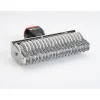
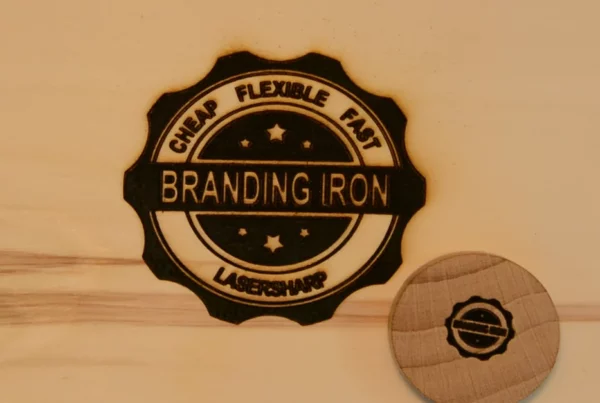
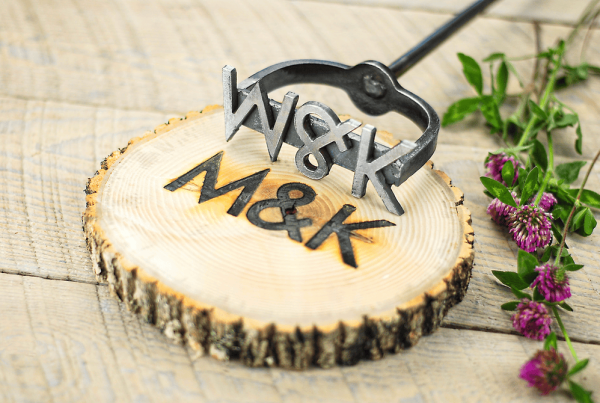
A branding iron is a metal tool with a raised design on its head. When that head gets hot, pressing it onto wood or leather burns the design into the surface.
During that press, heat passes only where the raised metal touches, so the surrounding surface remains unburned. That contact chars the top fibers, so the mark becomes part of the material itself.
Because that mark is permanent, branding works well where identification needs to survive regular handling. For example, furniture makers mark drawer bottoms, landscapers brand valve boxes, and pallet makers burn in the IPPC export mark.
Ink stamps and stickers, by contrast, sit on the surface and wear with handling. Metal stamps, meanwhile, create the mark through force rather than heat.
Identify the Material You Need to Brand
The material comes first because it determines the heat a brand needs. Here are 5 common options and how each takes a brand.
- Wood is the most common choice, though hardwood (oak or maple) needs more heat than pine.
- Vegetable-tanned leather holds fine detail at lower heat.
- Cork chars faster than wood, so it needs brief contact.
- Rubber takes a brand at low heat but needs good airflow.
- Certain plastics, wax, and soap also accept a light brand.
Choose Between Electric, Propane, and Flame-Heated Branding Irons
Electric irons suit steady shop work, propane units handle field jobs, and flame-heated irons cover occasional branding. Here are the 3 types side by side.
| Branding iron type | Best for | Key advantage | Considerations |
| Electric | Shops with steady output | Steady heat across many marks | Needs an outlet and costs more upfront |
| Propane | Field work and large heads | Portable heat from a propane tank | Needs a tank, hose, and open air |
| Flame-heated | Occasional or low-budget branding | Lowest cost and a simple setup | Cools between marks, so results vary |
Consider the Size and Design of Your Branding Iron
The head must fit the product, and the design must stay readable after branding. To get both right, check these 5 points first.
- Logo dimensions should leave a margin inside the flat branding surface.
- Large heads need more heat and pressure than small ones.
- Hairline details blur, so bold lines read better.
- Text needs thick letters and open spacing to stay legible.
- A branded mark cannot show shading, so complex logos need a one-color version.
Decide Between a Custom Logo and Standard Branding Iron
Custom branding irons reproduce your exact artwork, while standard irons use a ready-made design. To choose between those options, compare these 4 design routes.
- Custom logo branding puts one logo on every product for consistent recognition.
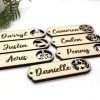
- Text branding covers names, initials, or short company details.
- Standard designs, such as a “handcrafted by” mark, suit makers who need a predefined symbol.
- Combination designs pair a logo with a date code or serial number.
Consider Heating Time and Temperature Requirements
Heating time sets how soon work starts, while temperature control determines how sharp each mark looks. With both factors in mind, compare these 4 heating considerations.
- Flame-heated irons warm up in minutes, while electric models often need 15 minutes or longer.
- Leather and rubber take a brand at roughly half the heat hardwood needs.
- Many plastics soften or melt quickly, so they need low heat and brief contact.
- A temperature controller keeps electric heat steady from mark to mark.
Think About Branding Frequency and Volume
Your daily volume determines how often the iron must reheat between presses. Based on that workload, compare these 4 volume levels and their setups.
- Occasional branding suits a flame-heated iron, since one heating covers a few pieces.
- Small-batch production moves faster with an electric iron that stays hot.
- Medium-volume work needs a higher-wattage element for shorter waits.
- High-volume commercial branding works well with a drill press attachment for more uniform pressure and depth.
Choose the Right Branding Iron for Your Business Application
The right iron fits your product and your work setting. Here are 6 common applications and what they need.
- Product branding needs a clear logo customers recognize at a glance.
- Woodworking needs a head sized to each surface.
- Leather goods need controlled heat to keep detail crisp.
- Packaging needs a brand sized to fit crate and box panels.
- Craft and small-batch work needs a compact handheld iron.
- Industrial work needs durable heads and steady heat at volume.
Branding Irons for Different Industries and Materials
Each industry pairs a core material with specific heat and sizing needs. Here are 5 industries compared by material and setup.
| Industry/application | Common material | Recommended considerations |
| Furniture and woodworking | Hardwood and softwood | A scrap test for each wood species |
| Leather goods | Vegetable-tanned leather | Low heat and even pressure |
| Beekeeping | Wooden hive boxes | Propane heat for deep marks outdoors |
| Wineries and distilleries | Cork stoppers | Small head and brief contact |
| Parts manufacturing | Certain plastics and rubber | Temperature control and short test runs |
Get in touch with Short Order Products for the right branding iron
Choosing the right branding iron starts with your material, and then you match heat source to volume and head size to logo. When those choices fit your work, every mark comes out clean.
For that exact fit, Short Order Products builds electric, propane, and flame-heated branding irons from your artwork, or its team designs one for you.
Start with your logo. End with a clean brand. Send your logo to Short Order Products now!
Frequently Asked Questions (FAQs)
Q1. Is a branding iron or laser engraver better for adding a logo to products?
A branding iron is better for repeating one logo across many products. That’s because each press takes only seconds and requires no software setup. Still, a laser engraver suits logos that change from order to order.
Q2. How much does a custom branding iron cost?
A custom branding iron costs between $143 and $1,377 at Short Order Products. Flame-heated personalized irons sit at the low end, while electric models cost $338.80. Add-ons like date codes raise the price.
Q3. Can you use a branding iron on finished wood?
Yes, although film finishes like polyurethane often char and yellow around the mark. That’s why branding before the topcoat gives a cleaner result. A thin shellac seal applied before branding can also limit edge scorch.
Q4. How do you get a clean, even brand without scorching the surface?
A clean brand comes from matching heat to the material and keeping contact time and pressure steady. A quick test on scrap helps confirm the right heat level first. After that, light sanding removes faint scorch.