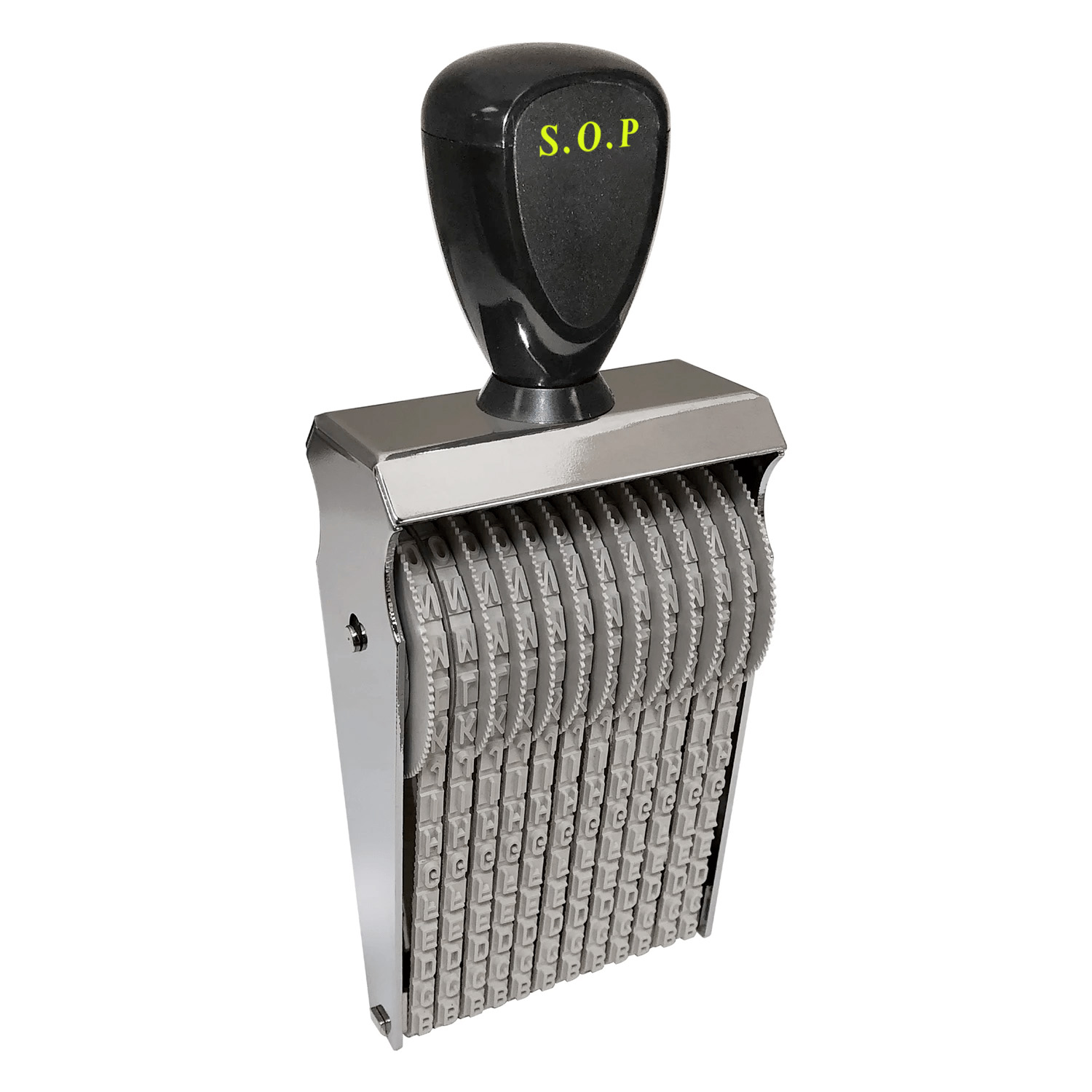
A box of freshly machined parts sits on your bench and every piece needs a code like “K12-0847”. letters first, numbers after. Now, do you really want to order a new stamp every time the batch changes? Definitely not! And luckily, you don’t have to.
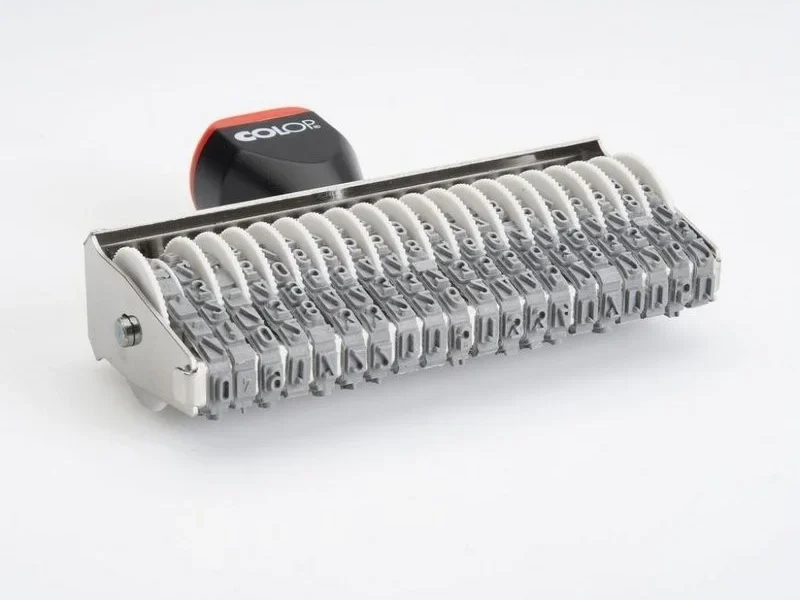
That’s where alphanumeric band stamps come in. Each band rotates, allowing one stamp to handle part numbers, batch letters, date codes and inventory tags. Just change the characters and you’re ready to go again. no pile of single-use stamps or messy handwritten codes that nobody can read later.
But when does a band stamp actually make sense for your shop. and when would another tool do a better job? Let’s look at the codes and situations where these stamps work best, along with a few cases where they’re not the right fit. The batch and lot identification tips are worth a closer look, too!
Why Do Some Manufacturing Identification Codes Require Both Letters and Numbers?
Mixed codes help you fit more information into fewer characters. A letter can identify a product family, while the numbers show its sequence. So, a short code like “A47-0912” can tell workers quite a bit without taking up too much space. Using numbers alone might require a much longer code to share the same details.
Most manufacturing shops develop these code formats as their needs grow. Model and part numbers often begin with letters that identify a category, followed by numbers that show a sequence or revision. It isn’t complicated. The mix simply makes sorting and inspection easier for everyone handling those parts.
Industry guides describe similar coding methods, too. Food producers can combine plant and shift details with production dates in a single lot code. If your shop uses a similar tracking system, a number-only stamp may not give you enough room to include everything you need.
When Do Alphanumeric Band Stamps Make More Sense Than Number-Only Stamps?
If your codes contain letters and numbers, an alphanumeric stamp is usually the more practical choice. A number-only stamp works perfectly well for basic counting. but what happens when you need to add even one letter? You end up handwriting it or switching between 2 different stamps. That’s where alphanumeric band stamps make life easier. They’re useful for these 5 situations:
- Mixed codes: Combine letters and digits in one code, such as “K12-87,” without switching stamps.
- Product categories: Use a letter prefix to identify the product family, followed by numbers for individual items.
- Part identification: Keep part and revision codes consistent across every marked piece.
- Tracking labels: Use the same code format for bins, shelves and inventory labels.
- Custom sequences: Set your own combination of letters and numbers, then change it in seconds.
6 Manufacturing Situations Where Alphanumeric Band Stamps Are Useful
Here’s where these stamps really earn their place in a manufacturing shop. whenever product codes change throughout the day. The bands rotate to different letters and numbers, so one stamp can handle multiple marking jobs instead of leaving you with a drawer full of single-purpose tools. Take a look at these 6 common situations:
- Component identification: Mark each part with its code before it moves to assembly or storage.
- Batch classification: Set the batch letter and number, then mark the entire production run.
- Model number marking: Add model codes to housings or packaging without needing a separate stamp for every model.
- Production date coding: Change the date bands each morning instead of ordering new stamps.
- Work order identification: Mark parts with their job codes to connect them with the correct work order.
- Quality inspection marking: Add a pass code or inspector letter so checked parts are easier to recognise later.
Which Manufacturing Components and Products Benefit From Alphanumeric Marking?
Alphanumeric band stamps leave an ink impression, so they’re best suited to surfaces that can hold ink. Short Order’s alphanumeric band stamps can mark metal, plastic and paper. making them useful for different products and materials found around a manufacturing shop. Here are 7 types of components and products that can benefit from alphanumeric marking:
- Machine components: Add part codes that help maintenance crews order the correct replacements.
- Fabricated parts: Mark batch and job codes that follow each piece through fabrication and finishing.
- Metal assemblies: Add an assembly code that matches the paperwork on the workbench.
- Replacement parts: Make it easier to identify and find the right parts on a shelf.
- Industrial equipment: Add asset and inventory codes to housings and panels.
- Product casings: Mark model or lot codes on enclosures before they leave the shop.
- Manufacturing subassemblies: Use interim codes to keep each subassembly matched with the finished unit.
When Should Manufacturers Use Alphanumeric Stamps for Batch and Lot Identification?
Use alphanumeric stamps when you need one code to identify an entire group of parts. A lot number connects items made under the same conditions and one lot can cover hundreds or thousands of parts. But what should go into that code? Start with the details your team needs to identify and track each batch. These pointers can help you build a consistent format:
- Lot or batch number.
- Production date.
- Shift or line code.
- Plant or facility letter.
- Material or revision code.
- Inspection status mark.
- Written code format that everyone follows.
The important thing is consistency. Everyone handling the parts should understand what the code means and where to find its matching production record.
When Are Alphanumeric Band Stamps Less Suitable for Manufacturing Operations?
Alphanumeric band stamps are useful, but they’re not the right tool for every marking job. For example, imagine stamping thousands of parts with unique serial numbers that increase one by one. Rotating the bands manually for every new number would quickly become tiring and slow.
A numbering machine that advances automatically is a better fit for that kind of work. Short Order also carries numbering machines for manufacturers who need a faster way to handle sequential numbering.
Permanence is another thing to consider. Band stamps leave ink impressions and ink markings can fade with wear. If your parts need long-lasting identification, a 2025 part marking guide points to laser and dot peen marking as alternatives. Metal stamps are another option worth considering.
And don’t overlook record-keeping! A stamped code is only useful when your team can connect it to the right information, such as a production log. Mixed batch codes, product family references, run IDs and lot-specific sequences all need a documented format. Otherwise, even a clearly stamped code can become confusing later.
Get Adjustable Letter and Number Band Stamps for Your Production Line From Short Order!
Need a stamp that can handle changing product codes without making your marking process complicated? Short Order Products offers alphabet, number, alphanumeric and custom band stamps in self-inking and handheld styles. The bands rotate, allowing one stamp to create thousands of consistent impressions. without needing a separate stamp for every code.
Looking for a layout that matches your parts or products? Custom band stamps are available and custom orders take about a week. Standard items ship quickly and returns are accepted within 15 days (custom pieces excluded). You can also speak with a knowledgeable team member to discuss your marking setup and find an option that fits your work.
Ready to stop ordering new stamps every time your code changes? Browse our full range of band stamps, or send us your code format through our contact page for a free quote. We’ll help you choose the right band layout for your parts. and make everyday marking a little easier.
Frequently Asked Questions (FAQs)
Q1. What is the difference between alphabet and alphanumeric band stamps?
Alphabet band stamps use letters only, while number band stamps use digits only. Alphanumeric band stamps combine both on one tool. So, if your codes contain even one letter, an alphanumeric stamp can save you from switching between 2 separate stamps.
Q2. Can I change the characters without buying a new stamp?
Yes! Each band rotates independently, so you can turn it to the letters and numbers you need and start stamping again. That’s what makes band stamps so practical. one tool gives you thousands of code combinations without waiting for a replacement order.
Q3. Is a self-inking or handheld band stamp the better choice?
It depends on your marking needs. Self-inking stamps are convenient because the ink pad is built in. However, their metal frame limits the maximum character size. A handheld stamp uses a separate pad and allows larger characters, so choose the style that works best for your parts and marking area.
Q4. Can one band stamp handle lot numbers and dates?
Yes, for most marking jobs. You can rotate the bands to create a lot of code, production date, or short serial code. However, if you need long serial number runs that increase automatically, a numbering machine is a better choice. it saves you from changing the bands by hand for every piece.