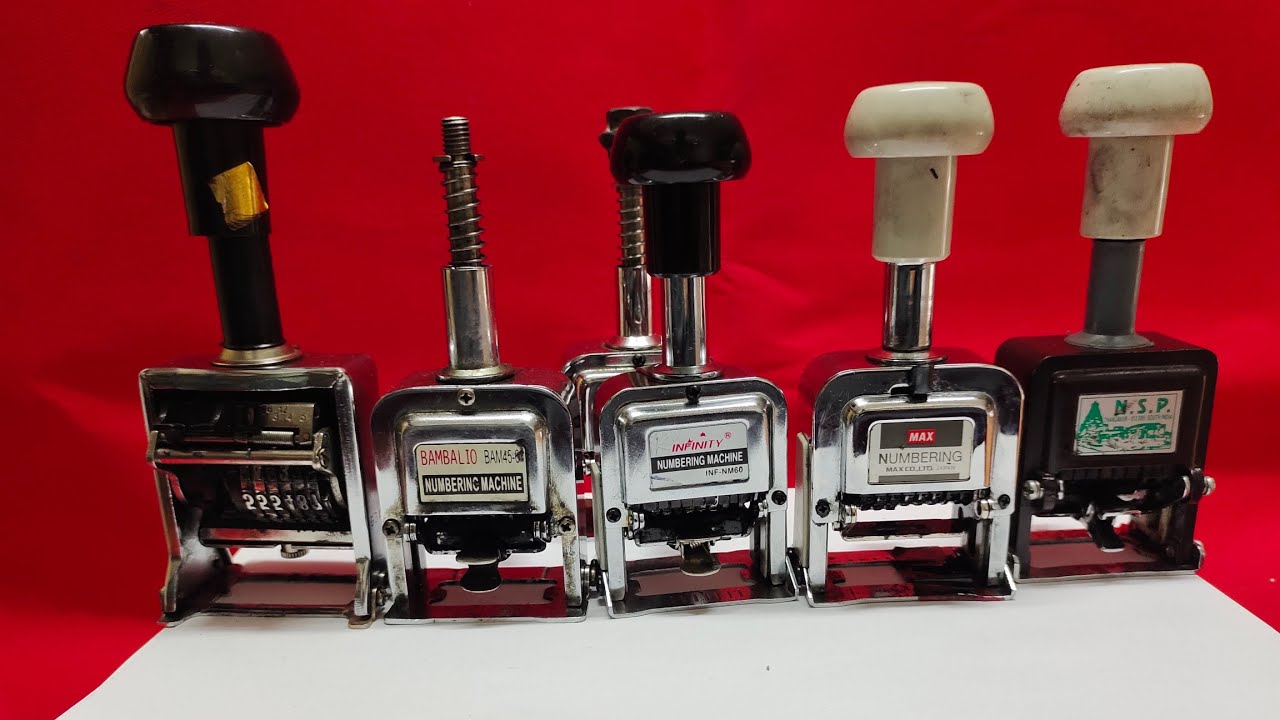
Few companies think about numbering until they need it, yet almost every company depends on it.
Accurate identification ties each part to the right order and each record to the right job, so errors surface quickly when that connection breaks.
Sequential numbering helps prevent these problems by giving every product, component, asset, and record its own identifying code. For smaller batches, manual numbering works fine, though it becomes slower and more error-prone as volume increases.
A dedicated machine addresses that problem by printing numbers in sequence, making marking faster and more consistent. Choosing the right numbering machine depends on the job, so buyers usually consider wheel count, marking surface, and daily volume.
What Are Numbering Machines Used For?
Numbering machines print sequential numbers onto paper, metal, and packaging so items stay identifiable. That covers 6 common uses:
- Serial number identification: Each unit gets a unique number.
- Asset identification: Digits mark company-owned equipment.
- Sequential numbering: Wheels advance one digit per impression.
- Batch and lot identification: One code marks each production run.
- Product and component tracking: Numbers follow parts through later production stages.
- Production and quality-control marking: Numbers help inspectors identify which unit passed inspection.
Why Businesses Use Numbering Machines
Hand numbering takes time and can allow errors to go unnoticed until later. 6 benefits make the switch to a numbering machine worthwhile:
- Fewer manual steps mean fewer numbering errors.
- Counters hold their sequence without manual resets.
- Repetitive marking takes less time on long production runs.
- Matching each number to its record simplifies product traceability.
- Printed digits remain legible, which improves identification accuracy.
- Production and inventory teams can then follow one numbering standard.
Industry #1: Manufacturing and Production
Manufacturing plants produce large volumes of items, so machine marking can save significant time on the production floor. 5 common uses account for much of that time savings.
- Batch and lot tracking group items by production run.
- Quality inspection records link results back to a single unit.
- Serial marking gives each finished unit a permanent identity.
- Production control teams use numbers to confirm output totals.
- Stamped numbers separate one product or component from another.
These numbers are most applied to manufactured components, parts, tools, production batches, and finished products.
Industry #2: Automotive and Parts Manufacturing
Automotive suppliers and manufacturers mark parts because warranty claims and recalls depend on knowing which unit left which line. 5 numbering tasks help meet that need.
- Part numbering matches each item to its catalog entry.
- Quality-control records tie inspection results to individual parts.
- Component identification separates similar castings and housings.
- Warranty and recall support identifies affected units linked to a fault.
- Supplier and production traceability points back to the production line.
These numbers are then applied to automotive components, replacement parts, manufactured assemblies, and production tooling.
Industry #3: Aerospace and Defense Manufacturing
Aerospace and defense parts require records that can last for decades, so numbering begins at production. 4 tasks are common on nearly every build.
- Serial number tracking follows one unit for years.
- Component identification separates near-identical parts.
- That same serial number is then used in maintenance and lifecycle records.
- Finally, production and inspection identification records who checked each part.
Industry #4: Metal Fabrication and Machine Shops
Machine shops operate multiple jobs at once, and similar products or parts are mass-produced, so numbering machines keep the work sorted. 4 uses come up daily.
- Job and production tracking links parts to a work order.
- Part identification separates one finished piece from another.
- Tool and equipment identification marks shop-owned fixtures.
- Component numbering keeps multi-piece assemblies in order.
Together, these uses reduce mix-ups, keep jobs tied to the right parts, and help shops maintain organized production.
Industry #5: Packaging and Product Manufacturing
Packaging lines move fast, so codes are applied to cartons and labels mid-run. 4 numbering tasks are common in this setting.
- Batch numbering groups output from one shift.
- Lot tracking supports recalls and shelf-life checks.
- Production identification shows which line ran the order.
- Product coding places readable digits on retail packaging.
Industry #6: Warehousing and Distribution
Warehouses track thousands of items alongside dozens of assets, so stamped numbers speed up counts and audits. 4 applications are common throughout the day.
- Shipment and product tracking follows goods to the dock.
- Equipment identification separates similar racks and carts.
- Inventory identification links each item to its recorded location.
- Asset numbering marks owned property for depreciation records.
These applications commonly cover inventory items, storage equipment, warehouse assets, and handling equipment.
Industry #7: Medical Device and Healthcare Manufacturing
Medical manufacturers face strict record rules, so numbering is used for 4 production tasks.
- Batch and lot identification groups sterile runs.
- Component traceability links parts to suppliers.
- Production records match numbers to build dates.
- Device identification marks each unit before shipping.
Industry #8: Construction and Industrial Equipment
Construction firms constantly shift equipment between sites, and unmarked gear disappears, so stamped identification protects owned property. 4 uses matter most on site.
- Asset numbering supports depreciation and inspection records.
- Maintenance tracking links service history to a specific machine.
- Tool identification helps prevent tools from being lost on shared job sites.
- Equipment identification confirms ownership when equipment moves between sites.
The table below shows where those numbers are usually applied.
| Asset | What the number tracks |
| Heavy equipment | Ownership and service history |
| Tools | Site assignment and returns |
| Machinery | Inspection and repair dates |
| Components | Replacement part matching |
| Rental assets | Checkout and return records |
Industry #9: Utilities and Infrastructure
Utility crews service equipment spread across wide areas, so field assets need numbers that survive weather. 4 uses of numbering are common in the field.
- Asset tracking keeps ownership records current.
- Maintenance records link service dates to a single asset.
- Equipment identification distinguishes each unit in the field.
- Inspection identification records which crew signed off on the work.
Industry #10: Electronics and Electrical Manufacturing
Electronics plants build small parts in huge quantities, and dense designs can make those parts harder to tell apart, so numbering machines with fine wheels keep the output sorted. 4 uses are common in this setting.
- Batch tracking groups boards from one solder pass.
- Quality-control identification flags units awaiting retest.
- Production numbering records which shift built the unit.
- Component identification separates parts with matching footprints.
These uses cover components, assemblies, electrical equipment, and production batches. Because many of these parts have small surfaces, there is little room for a long code, so legibility matters. Wheel size and ink choice also affect how clearly the marking reads.
5 Types of Businesses That Benefit Most From Numbering Machines
Industry labels matter less than operating conditions, since the same challenges can create the same need for numbering. 5 types of businesses benefit most from numbering machines.
- Businesses that require traceability use numbers to match parts to their records.
- Businesses with high production volumes number items throughout the day.
- Businesses with repetitive identification tasks save labor time.
- Businesses managing large asset inventories track ownership using numbers.
- Businesses managing many similar components need clear identification to distinguish parts.
Find the Right Numbering Machine for Your Application Today!
Across all 10 industries, the same pattern holds: volume, similarity, and record-keeping determine whether hand numbering is still practical. As those demands grow, a numbering machine can help reduce errors and speed up marking enough to justify the cost. The surface also matters, since paper, metal, and packaging can require different wheel types and inks.
For those marking needs, Short Order Products offers economy, deluxe, key-set, custom, and handheld numbering machines, plus band stamps, metal stamps, metal tags, and branding irons.
Browse the range and order the model that fits your marking needs!
Frequently Asked Questions (FAQs)
Q1. When should a business upgrade to an automatic numbering machine?
Daily volume usually decides when to switch from manual to automatic numbering. When a team numbers items every shift instead of occasionally, an automatic model can save time because the counter advances on its own. For lower-volume work, however, manual machines can still be a practical choice.
Q2. What are the benefits of using a numbering machine for business?
Accuracy comes first, because clear digits make each number easy to read and keep sequences consistent. Speed follows since one press marks an item in about a second. Traceability comes third, as each number can be traced back to a production or inventory record.
Q3. What are numbering machines used for in different industries?
Different sectors use numbering machines for the same basic purpose, although the surfaces they mark can vary. For example, manufacturers mark parts and batches, warehouses number assets and inventory, while medical and aerospace producers use serial numbers for lifetime traceability.
Q4. What is a numbering machine, and how does it work?
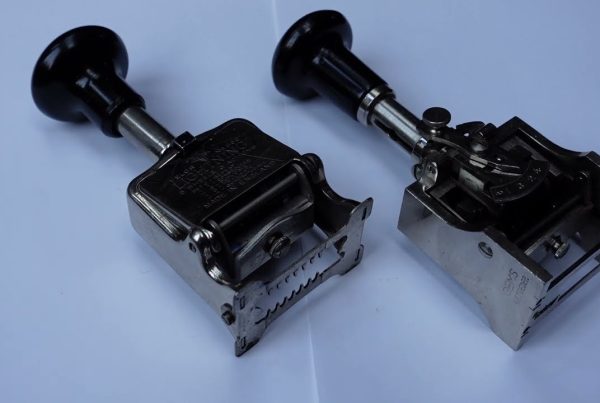
A numbering machine prints a running number using a set of rotating wheels. With each press, ink transfers onto the surface, and the number advances by one. The number of wheels sets the number length, while repeat settings control the sequence.