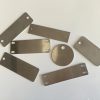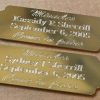
Ink on paper may fade, but efficient indentations on metal are permanent. A majority of industries rely on metal stamps for crucial identification needs. The right mark depth, production speed, durability, formability, and corrosion resistance are mandatory quality markers to ensure clear, highly readable, and long-lasting labels.
But material hardness, label thickness and gauge, and surface finish differ for every metal label. When metal stamps are incompatible with metal labels, the product is either a faded mark or a broken tool. The key takeaway? Different materials and marking applications require different stamping solutions.
Whether soft labels are paired with hard stamps or hard labels with soft stamps, both are unfavorable conditions. To avoid the trouble of inconsistent marks, poor readability, and inefficient workflows, buyers are recommended to evaluate several factors before selecting metal stamps.
What Do You Need the Metal Stamp to Mark?
Metal stamps are used for a variety of purposes, with different needs requiring different marks. Long-term durability and clarity of the text/design depend on specific stamp types, sizes, and material composition. Selecting the right metal stamp starts with distinguishing what you need to mark on the metal surface:
- Serial Numbers and Identification Codes: Susceptible to change; buy interchangeable steel type holders or automatic numbering stamps; allows you to change digits quickly for sequential tracking.
- Part Numbers and Component Identification: Stay the same for every item; go for standard individual steel stamps or engraved solid steel punch dies; ideal for permanent, fixed alphanumeric strings on production parts.
- Asset and Equipment Identification: Demand large, deep marks; heavy-duty roller stamps or large individual punch stamps are good for this; create visible impressions on thick industrial metal.
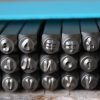
- Letters, Numbers, and Custom Text: Need standard steel hand stamps; get a complete set (having A-Z and 0-9 characters); perfect for versatile, low-volume text marking.
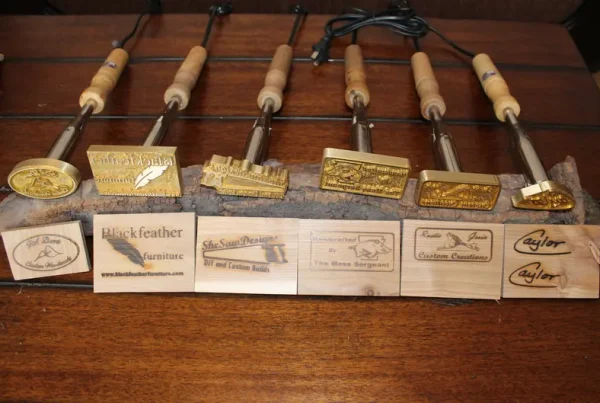
- Logos and Custom Designs: Require custom-engraved stamps; order from specialized toolmakers (who can carve an exact drawing into the steel tip) for precision; gives a professional brand look.
- Inspection and Quality-Control Marks: Extremely small; individual flat face symbol stamps or small face concave stamps are highly recommended; leaves a tiny yet clear code (to indicate inspection).
What Material Will You Be Stamping?
Defining the purpose of marking metal is one thing; picking the right material is another. No high-quality metal stamp will work when it’s stamped on the wrong type of metal label. Understanding metals and their optimal force intensity helps pair the right label with the right stamp.
- Aluminum: Moves and bends easily; doesn’t require a heavy hammer or a special high-grade tool; a standard carbon steel stamp is ideal to apply (using medium force).
- Steel: Hard and strong, it typically resists the stamp face; demands precision; a heavy-duty, hardened tool steel stamp works well with a heavy hammer (or a mechanical press).
- Stainless Steel: Harder and tougher than regular steel; standard stamps can easily flatten out; requires top-grade, hardened impact stamps; highly recommended to use a heavy pneumatic press or an intense hammer blow.
- Brass and Other Metals: Harder than aluminum, softer than steel; a standard carbon steel stamp is ideal for use; deliver light/medium blows through the stamp; advised to practice on scrap pieces first.
Type of Metal Stamps for Different Applications
As a buyer, the last thing you’d want is a metal stamp that either chips or cracks during a hard strike. Be it aluminum, brass, copper, stainless steel, or titanium – every metal type requires a particular type of stamp.
Factors like hardness rating of the stamp, the temperature of metal labels, form tolerance, character types (small/large), and usage methods (hand hammering/press stamping) assess what type of metal stamp would be best suited for a variety of different applications. Here’s a brief overview:
1. Custom Metal Stamps
Suiting its name, custom metal stamps are made to align with the buyer’s proposed logo design, unique signature, or specialized part number. Custom metal stamps are:
- Engraved with specific corporate logos, unique serial layouts, or propriety symbols
- Best suited for branding manufactured products, artisan hallmarks, or unique part identification
- Considered when standard alphanumeric characters deviate from the buyer’s branding, tracing, or design needs
2. Metal Hand Stamps
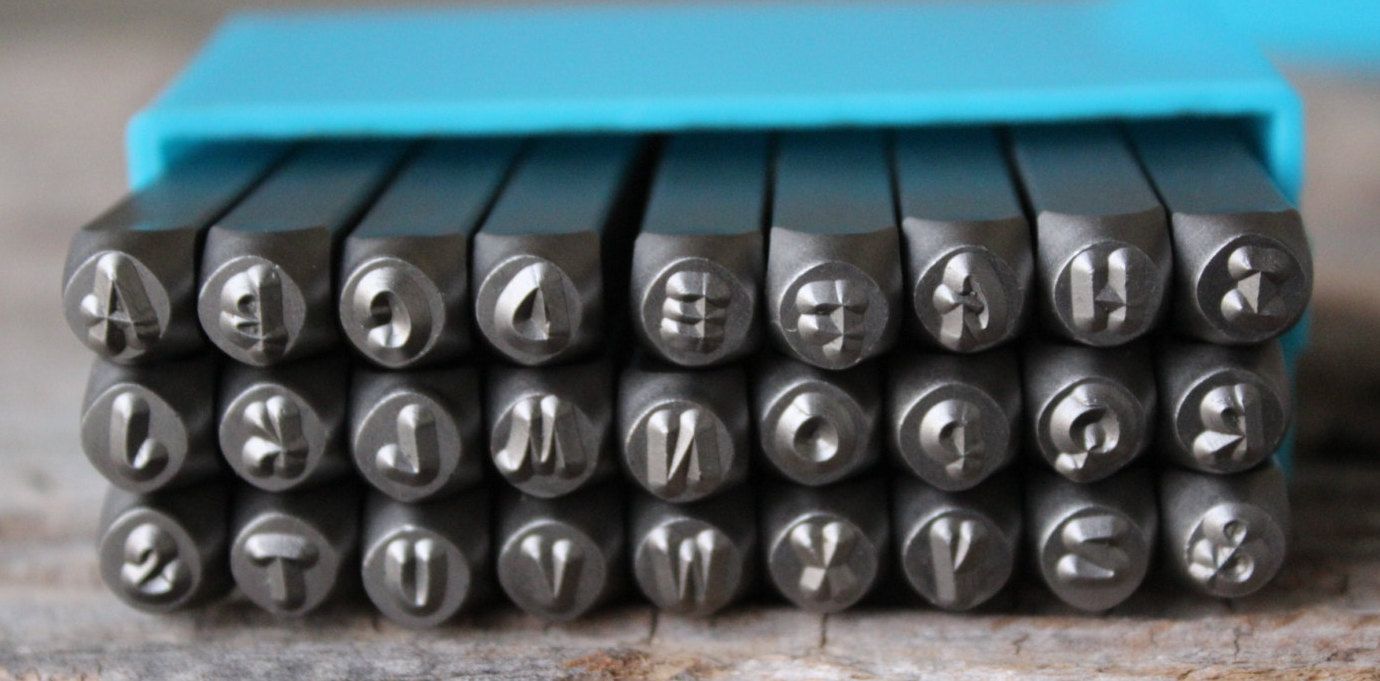
Metal hand stamps are single rods that feature an engraved letter, a number, or a simple symbol (on one end). Meant to be used manually by placing the tip on the metal label and striking the top end with a hammer, metal hand stamps are:
- Composed of single-character or small-logo
- Best suited for low-volume tool marking, jewelry stamping, and field service tags
- Considered when metal labels are soft, the workload is small, and portability is needed.
3. Metal Marking Hammer Stamps
Metal marking hammer stamps are unified devices, made from a combination of the striking tool and stamp. Highly useful for quick, repetitive marking tasks, metal marking hammer stamps are:
- Coupled with interchangeable heads or integrated textured faces (for rapid text embossing)
- Best suited for general workshop fabrication, hobbyist projects, and quick ID tags
- Considered when an all-in-one handheld solution is needed (skipping the need to swap individual loose punches)
4. Metal Presses & Multi-Character Holder
Metal presses and multi-character holders secure a variety of letters or numbers inside a single frame or mechanical press. Exerting steady pressure through leverage, pneumatics, or hydraulic presses, metal presses and multi-character holders are:
- Setups with tracks to lock multiple letters/numbers in a row
- Best suited for high-volume serial numbers, data plates, and production-line batch coding
- Considered when efficiency, uniform depth, and perfect horizontal alignment are needed
5. Metal Stamp Hammer
Metal stamp hammers are heavy, flat-faced striking tools to hit steel stamps. Too often, regular household hammers become inefficient to help stamps leave lasting impressions. Slipping stamps (upon impact) can be easily avoided with metal stamp hammers, which are:
- Made of weighted brass or steel
- Best suited for delivering clean, single-strike impressions without double-bouncing the stamp face
- Considered when standard household claw hammers fail to achieve controlled, professional-grade stamping depths
How Does Character Size Affect Metal Stamp Selection?
Character size is integral to using metal stamps efficiently. Factors like optimal impression force, marking depth, and text size fitting (on metal label) affect metal stamp selection. From a buyer’s perspective, here are some key considerations:
- Matching Character Size to the Marking Surface: Measure the metal piece, then pick the stamp size; ensure the text block fits the flat surface without spillage; use specialized curved stamps if the surface is curved or narrow.
- Small Characters for Compact Components: Use miniature stamps (1 mm-3 mm) for rings, delicate jewelry, or small electronic parts; the small faces concentrate the hammer strike into a tiny footprint, allowing long serial numbers or full names to fit onto small spaces.
- Larger Characters for Visibility: Characters (5 mm to 10 mm) are needed for things demanding instant information comprehension (from a distance); ideal for industrial tags, structural beams, and large keychains; requires heavier hand hammers/mechanical presses.
- Character Size and Readability: Height and thickness of the font require precise alignment; optimal character sizing ensures readability against gradual dirt accumulation and paint layers.
- Character Size and Marking Depth: Character size determines force needed to deliver an impression efficiently; small tips sink deep with low force; large tips require higher force (due to a wider face) to achieve standard compliance depths.
What Marking Depth and Permanence Do You Need?
Understanding the specifics of character sizes isn’t enough; a good grip over marking depth and permanence is also needed for selecting the right metal stamp. To assess what would work best for you, pay attention to:
- Surface Identification Marks: Shallow impressions; used for light, temporary, or cosmetic part labeling.
- Deeper Permanent Impressions: Heavy strikes or machine presses; used for long-lasting, clear visibility.
- Marks Exposed to Wear and Abrasion: Ultra-deeper stamping or roll marking; used to withstand friction and material loss over time.
- Long-Term Part Traceability: Deep, high-stress stamps or dot peen methods; used for ensuring survival through harsh environments, paint layers, or corrosion.
Where Will the Marked Component Be Used?
The essentials of metal stamps and marked components provide buyers the information necessary to choose the right metal stamp for application. But knowing specific operating environments for marking components gives direction to arrive at a decision. Areas where marked components are used include:
- Indoor Manufacturing Environments: Don’t require deep or heavy stamps (pertaining to clean and dry air), making light roll stamps or standard steel stamps ideal.
- Outdoor Equipment: High risk of corrosion from the rain, sun, and dirt demands deep stamps, rendering weather-resistant stainless steel or galvanized stamps to be perfect for use.
- High-Wear Applications: Metal parts exposed to friction (rubbing or hitting) from other objects are vulnerable to fast damage, which makes carbide-faced stamps a choice that lasts longer.
- Maintenance and Industrial Environments: Heavy dirt, oil, and rough handling are a regular occurrence, which makes heavy-duty impact or pneumatic stamps a mandatory requirement.
- Applications Exposed to Moisture or Chemicals: Wet or strong acids cause rapid decay; such applications typically last longer when their composition entails corrosion-resistant special alloys and deep-etched stamps.
Standard Metal Stamps vs Custom Metal Stamps
Aspect |
Standard Metal Stamps |
Custom Metal Stamps |
Letters and Numbers |
Standard alphabetical (A-Z) and numeric (0-9) kits | Made-to-order specific characters with custom-set heights and fonts |
Common Identification |
Serial numbers, basic dates, and simple part tracking | Company names, specific part codes, and propriety IDs |
Custom Text |
Limited to individual loose letters demanding manual line-ups | Fixed multi-line, full phrases/names on a single tool |
Logos and Unique Designs |
None | Yes |
Specialized Marking |
Standard sharp or flat face (used for basic indentations) | Low-stress/dot-matrix faces (used for aerospace or curved surface dies) |
Repeated Custom Marking |
Slow; multi-step | Fast; single-step |
Best Production Volume |
Low | High |
Target Material Match |
Soft metals only | Soft to hard |
Choosing the Right Metal Stamp for Common Applications
From basic part identification to custom branding, every application has a different marking requirement. The production volume, type of information, required visibility, and marking surface determine which metal stamp performs best. Here’s what buyers should consider for common applications:
- Part and Component Marking: Standard steel stamps are ideal for permanent part numbers, letters, and basic identification codes; suitable for components that need clear tracking throughout their service life.
- Serial Number Marking: Automatic numbering stamps or interchangeable holders work best; allow digits to change quickly for sequential numbering across multiple components.
- Equipment Identification: Large-face stamps are recommended; leave deeper and more visible impressions on heavy machinery, industrial equipment, and other large metal surfaces.
- Tool and Machine Identification: Hardened impact stamps are preferred; withstand repeated handling, strong hammer blows, and rough workshop conditions without easily losing their character shape.
- Manufacturing and Fabrication: Metal presses and multi-character holders are suitable; help maintain consistent spacing, marking depth, and alignment during repetitive production work.
- Quality and Inspection Marking: Small symbol stamps or flat face stamps are commonly used; they create compact identification marks without occupying unnecessary space on the component.
- Custom Branding: Custom-engraved stamps are the better choice; reproduce company logos, signatures, symbols, or other unique designs directly onto the metal surface.
Explore Short Order Products & Find the Right Metal Stamp for Your Application!
Selecting the right metal stamp ultimately depends on what needs to be marked and how the marked component will be used. A metal stamp that works for a small inspection code may not deliver the same results on heavy equipment or high-volume production parts.
At Short Order Products, buyers can explore different metal stamping solutions for identification, production, inspection, and custom marking needs. With a wide variety of stamps available on our website, choose the stamp that best fits your application requirements.
Finding an efficient metal stamp and achieving clean, consistent, and permanent impressions is only a few scrolls away. Skip the guesswork, order yours today.
Frequently Asked Questions (FAQs)
Q1. Which type of stamp is best?
The best metal stamp depends on the material, marking purpose, character size, and required marking depth. Hand stamps are a great choice for low-volume work, while custom stamps and metal presses are better suited for specialized or high-volume applications.
Q2. What is the best metal for metal stamping?
The best metal depends on the application. Aluminum works well with standard carbon steel stamps. Harder materials like steel and stainless steel require hardened, heavy-duty stamps.
Q3. Do you need a special hammer for metal stamping?
Yes, a metal stamp hammer is recommended for controlled and consistent impressions. Weighted hammers deliver clean strikes and help prevent the stamp from slipping or bouncing.
Q4. Where can I find custom metal stamps?
You can find custom metal stamps at Short Order Products, where stamps can be made for logos, signatures, and specialized part numbers.