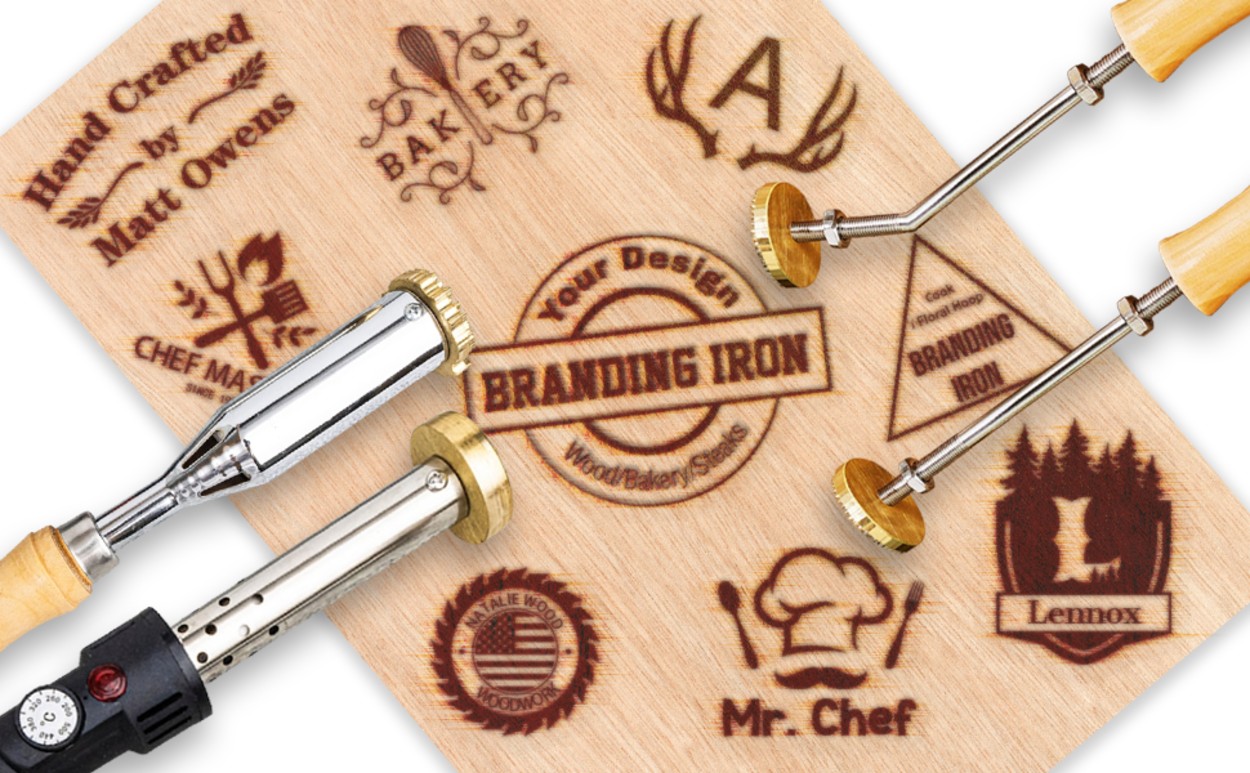
You pick up a handcrafted wooden piece at a local market. It feels solid, well-made – but what really catches your attention is the small, burnt-in logo on the corner. It’s simple, yet it makes the piece feel intentional, almost personal. You don’t know the maker… but somehow… you trust the work.
That’s the power of a physical mark. In a world where most brands live on screens, a branding iron gives your work something lasting – something people can see, touch, and remember. For creators, it’s more than a tool – it’s a secret weapon for turning ordinary products into recognizable, unforgettable pieces.
Let’s explore how to use branding press to build a brand people can’t ignore.
Why Every Creator Should Leave Their Mark
We live in an era of authenticity, where customers aren’t just buying a product, they’re buying a moment, a feeling, and a story. This is because they crave legitimacy, and every detail of your packaging shapes how your brand is perceived. So, when you use branding stamps, you move beyond surface-level decoration. You create a tactile, lasting seal of quality – something a sticker or hangtag simply can’t replicate.
Beyond aesthetics, heat-based branding offers several practical advantages, including:
- Permanence – Unlike ink, a brand won’t peel, fade, or wash off. It ages with the piece.
- Professionalism – It signals to the customer that you are an established entity, not just a hobbyist.
- Storytelling – It connects the raw material back to the maker’s hands.
Understanding Branding Irons and Tools
Not every branding iron is created equal. Depending on your workload and the materials you use – you’ll want to choose the branding tool that best fits your workflow.
1. Flame-Heated Irons
These are the old-school classics, rooted in centuries of craftsmanship. Featuring a heavy brass or steel head, flame-heated branding irons are warmed using a propane torch, gas burner, or even an open fire. The process is tactile and immersive, which builds a deeper connection between the maker and their work.
Best for small batches, rustic or artisanal aesthetics, outdoor use, and creators who enjoy a hands-on, craft-driven process.
Pros
- Completely cordless, offering excellent portability and freedom of movement
- Ideal for remote locations, workshops without electricity, or on-site branding
- Provides a traditional, authentic feel that many artisans value
Cons
- Maintaining a consistent temperature requires experience and attention
- Risk of overheating or underheating – which can affect branding quality
- Slower workflow compared to electric options
2. Electric Branding Irons
The workhorse of the modern workshop. Electric branding irons plug into a standard outlet and are designed to maintain a stable, controlled temperature throughout use. Many models of this type of branding iron include adjustable heat settings for different materials such as wood, leather, or cork.
Best for high-volume production, small businesses, and brands that require consistency.
Pros
- Consistent heat ensures uniform depth, tone, and clarity
- Faster workflow – brand multiple items in quick succession
- User friendly – with minimal learning curve
- Some models allow interchangeable heads for different designs
Cons
- Requires access to a power source – limiting portability
- Cords can restrict movement in tight or mobile workspaces
- Typically more expensive than flame-heated options
3. Drill Press Mounted Irons
For those who demand absolute precision, branding irons can be mounted onto a drill press. This setup allows for controlled, perfectly vertical pressure with the press lever, eliminating human inconsistency in application.
Best for professional furniture makers, luxury packaging, product manufacturers, and any application requiring flawless alignment.
Pros
- Exceptional precision and repeatability
- Consistent pressure results in clean, sharp impressions every time
- Reduces operator error, especially on high-value materials
- Ideal for scaling high-end production
Cons
- Requires additional equipment and setup time
- Less flexible and not portable
- Higher initial investment compared to handheld methods
How to Brand Your Work the Right Way
Branding is an art form – and like any art, it requires technique. You don’t want to ruin a project made by a branding iron you spent forty hours on in the final ten seconds.
The Test Run
- Always brand a scrap piece of the same material first. Wood density varies; oak responds differently to branding irons than pine, and veg-tan leather is a whole different beast than chrome-tan.
The Rocking Motion
- Instead of pressing down hard, gently rock the branding iron in a north south, then east west motion. This ensures the edges of your logo are crisp.
Timing is Everything
- For wood, a 3- to 5-second press is usually plenty. For leather, it’s often a ‘touch and go’ situation to avoid bleeding the lines.
Branding Tips for Creators and Entrepreneurs
To build a lasting brand identity – your mark needs to be intentional. Here are some tips to help you brand better if you are new to using branding irons.
Placement Matters
- Don’t just slap your logo in the middle of a table. Look for ‘hidden’ spots – the underside of a drawer, the back of a frame, or the bottom corner of a cutting board. It’s like a hidden signature.
Keep It Simple
- High-detail photos don’t translate well to burnt marks. Use bold lines and clear typography. If your logo is too detailed – it will just look like a charcoal smudge.
Contrast Is King
- Darker woods like walnut require a deeper burn from a branding iron to be visible – while lighter woods like maple show off a light golden brown brand beautifully.
The Impact of a Well-Executed Brand
Before diving into the details, it’s important to understand that a well-executed brand is more than just a mark – it shapes how customers perceive your work
Transforms products into a cohesive collection
- When your brand appears consistently across your work, individual items feel connected – part of a larger story rather than standalone pieces.
Creates Instant Recognition
- A well-applied brand becomes your visual signature, making your work identifiable at a glance – even without labels or packaging.
Helps Build Trust
- Customers begin to associate your mark with quality, craftsmanship, and reliability – increasing confidence in every purchase.
Increases Value
- Branded items feel more intentional, finished, and collectible – often seen as more valuable than unmarked equivalents.
Strengthens your identity as a maker
- Your brand connects each piece back to you, reinforcing your style, standards, and reputation in the market.
Brand Every Piece, Build Your Legacy
Building a brand identity isn’t just about marketing – it’s about the physical evidence of your craftsmanship. By choosing the right branding iron and mastering the technique – you ensure that your hard work carries your name long after it leaves your workshop.
If you’re ready to take your branding further, investing in a custom branding press can be a powerful next step. With Short Order Product, you don’t just finish a product – you claim it.
-
Can I use the branding iron on leather?
Absolutely! However, leather requires much lower temperatures than wood. If you use an electric iron – consider a rheostat to dial down the heat so you don’t melt the surface.
-
What is the best metal for a branding iron head?
Brass is the industry standard. It holds heat exceptionally well, distributes it evenly, and doesn’t rust as easily as iron or steel.
-
How do I get a clean mark without ‘halos’?
A ‘halo’ occurs when heat from the iron’s base scorches the wood around the logo. To avoid this, make sure your iron is at the optimal temperature so you can work quickly, and don’t press too deeply into the fibers.
-
Do I need a custom logo – or can I use standard fonts when using a branding iron?
Most branding iron manufacturers can turn any vector file into a custom head. While standard fonts work, a custom logo is what truly builds a unique brand identity.
-
How long do branding irons last?
A high-quality electric or flame-heated iron can last a lifetime if the head is cleaned regularly and the heating elements aren’t overworked. It’s a one-time investment for a lifetime of marking.