An identification tag holds value only when its markings stay readable. Once numbers fade or letters chip off, you can no longer identify or track the asset.
Most teams choose between printed labels (ink on adhesive backing) and engraved tags (markings cut directly into metal or plastic). Both work in theory. However, each behaves differently once heat, moisture – or chemicals enter the workspace.
That’s why companies operating outdoor equipment, regulated machinery or high-temperature lines choose Short Order Products for engraved and stamped tags. Its laser and rotary engraving processes create markings that stay readable in harsh conditions.
How Durability Impacts Equipment and Asset Identification
Durability decides whether identification remains useful or becomes a liability. For this reason, long-term readability is critical as consistent identification underpins asset tracking across the company. For example, maintenance teams scanning fifty pieces of equipment end up guessing when numbers fade which slowly reduces the accuracy of inventory systems.
That’s why unreadable marking creates hidden costs. These include replacement labels, reapplication labor, audit hours lost to mismatched assets and compliance penalties in regulated industries that stack up fast. Most importantly, cheap tagging often becomes the most expensive option once all these costs are combined.
Comparing Engraved Tags and Printed Labels Across Durability Factors
Engraved tags hold an edge across almost every durability factor while printed labels offer lower upfront cost and faster turnaround. Each option behaves differently in dust, chemicals and outdoor exposure. The table below shows how an engraved & stamped tag solution compares under real-world operating conditions. Here are 6 differences:
| Durability factor | Engraved tags | Printed labels |
| Weather exposure | Resist UV, rain, and temperature swings | Fade and curl within 6 to 18 months |
| Chemicals and solvents | Markings cut into metal stay intact | Ink dissolves or smears under cleaners |
| Abrasion and physical wear | Surface scratching does not erase the engraving | Adhesive backing rubs off with friction |
| High-temperature settings | Handle 400°F and higher without distortion | Labels peel or char above 200°F |
| Moisture and humidity | No adhesive failure, no ink bleeding | Edges lift, ink runs, visibility drops |
| Lifespan in harsh settings | 10+ years on outdoor metal | 6 months to 2 years on the same surface |
How Long Do Printed Labels Typically Last?
Printed labels last between 6 months and 5 years, with environment, material and ink type determining the actual range. For example, indoor labels hold up longest while outdoor – or chemically exposed ones often last within a year. The print method (inkjet or laser), the material (polyester or vinyl) and daily exposure to UV, heat and chemicals together decide how long any single label lasts.
In many cases, breakdown begins when the adhesive weakens along the edges. The ink then fades under sunlight, moisture makes the corners curl and abrasion strips the print away. That’s why even premium industrial labels rarely match metal engraving in heavy outdoor wear.
How Long Do Engraved Tags Typically Last?
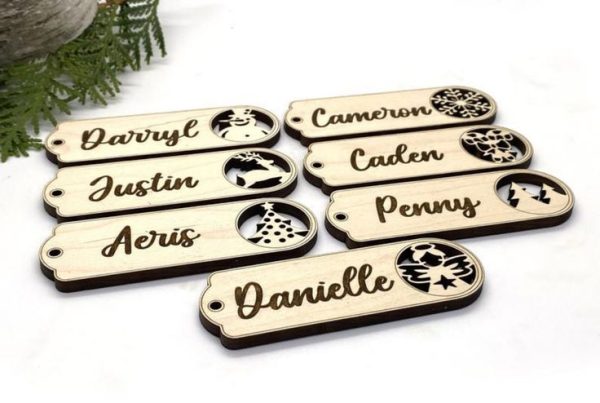
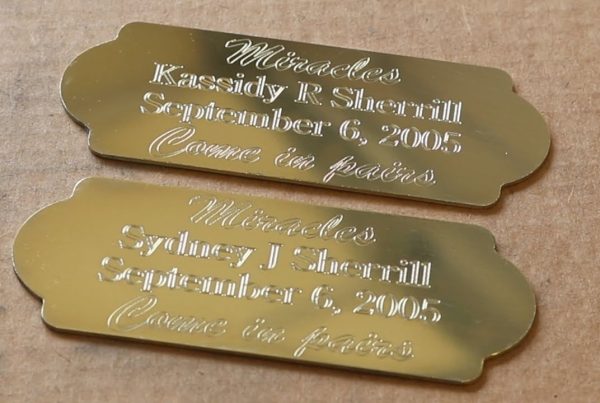
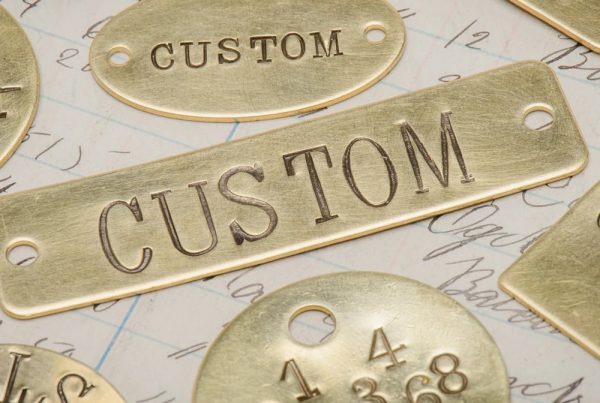
Engraved tags last 10 to 30 years and in many cases, metal ones often outlast the equipment they are attached to. The reason traces back to how the marking is created in the first place. For example, laser and rotary engraving cut letters and numbers into brass, aluminum or stainless steel by removing a thin layer of metal. Since there is no ink or adhesive on the surface, normal wear cannot erase the marking.
Beyond the engraving method, material choice extends that lifespan even further. For instance, stainless steel resists corrosion, anodized aluminum handles UV and brass holds up well against industrial chemicals. That’s why industries – like oil and gas, pharmaceuticals, electrical utilities, food processing and aerospace rely on engraved tags that remain traceable for decades. In the end, a well-built engraved & stamped tag often outlasts the asset it is attached to.
When Printed Labels May Be the Better Choice
Printed labels make sense when the information itself is short-lived. For this reason, they cost less per unit, can be printed in bulk quickly and work well for any job where the label is replaced before durability becomes a concern. Here are 3 reasons:
- Temporary identification applications: Trade shows, seasonal storage and one-time projects rarely need a tag built to last a decade.
- Short-term inventory projects: Bulk shipments and fast-moving stock are labeled with printed labels because they need to remain legible for a shorter period.
- Frequently changing information: Pricing tags, rotating bin labels and serial numbers that update monthly benefit from cheap replacement.
When Engraved Tags Are the Better Long-Term Investment
An engraved and stamped tag is a worthwhile investment for equipment that stays in service for years especially when losing or replacing a label can be costly. It is best suited for fixed equipment, regulated industries and outdoor applications where printed labels wear out quickly. Here are four reasons:
- Fixed asset identification: Boilers, generators, transformers and machinery that remain in service for decades require markings that last just as long.
- Equipment and machinery tracking: Inventory systems built on barcode – or serial-number scans depend on tags that scan precisely years later.
- Compliance and inspection programs: OSHA, FDA and ISO workflows require durable identification that holds up across every audit cycle without missing labels or chipped markings.
- Outdoor and harsh environment applications: Rooftop equipment, marine assets and chemical plants strip printed labels off within months, while engraved metal remains intact.
Choosing the Right Identification Solution for Your Business
The right choice depends on the asset’s lifespan, surrounding conditions and the cost of a faded label. Three factors usually determine which of the two methods to choose. The first factor is how long the asset remains in service. Next comes daily exposure to temperature, chemicals and weather. Finally, the cost of an unreadable tag during an audit completes the picture. When all three factors are carefully considered, they point to a clear method even before price becomes the deciding factor
For this reason, short-lived information and low-stakes assets are well-suited to printed labels. In contrast, long-lived equipment, regulated workflows and outdoor applications are well-suited to engraved metal. Over time, replacement labor and audit penalties eliminate any upfront cost advantage.
Explore Engraved Tags Collection & Decide If It Fits Your Needs!
The lifespan gap between engraved tags and printed labels usually determines a suitable choice. In practice, printed labels suit short-term inventory projects, frequently updated information and indoor settings with a lower risk of wear and tear. In contrast, engraved tags hold well against heat, harsh chemicals, abrasion and outdoor weather. As a result, the choice should be based on the asset’s operating condition and expected service timeline.
To support these requirements, Short Order Products provides laser and rotary engraving in aluminum, brass, stainless steel and outdoor-rated plastics, with shapes, finishes and adhesive backing customized to specific applications. In addition, every engraved & stamped tag is available in low-minimum runs with quick turnaround times. The result is a durable identification that retains its value throughout the asset’s life – not just until the next audit cycle. Contact us now!
Frequently Asked Questions (FAQs)
Q1. How long do engraved metal tags typically last?
Engraved metal tags last 10 to 30 years. In fact, stainless steel and anodized aluminum versions often outlast the equipment they are attached to.
Q2. What industries commonly use engraved tags?
Oil and gas, pharmaceutical manufacturing, electrical utilities, aerospace, food processing and heavy machinery operations rely on engraved tags for long-term equipment tracking.
Q3. Are engraved tags suitable for compliance and safety programs?
OSHA, FDA, and ISO programs all accept engraved metal tags. The markings survive every audit cycle without re-labeling gaps – which matters in inspection-heavy industries.
Q4. Can engraved tags withstand chemicals and cleaning solutions?
Engraved tags withstand chemicals and cleaning solutions because the marking is etched into the metal rather than printed on top. As a result, solvents and industrial cleaners do not affect readability.