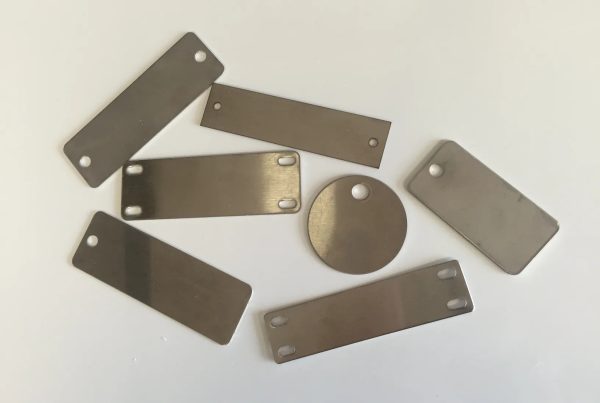
When it comes to withstanding extreme environments, industrial metal tags offer durability like no other. The tags are circular, square, or rectangular (with rounded corners), featuring smooth surfaces & room for essential yet limited information, spaces that are either filled with laser-engraved, chemically etched, or embossed markings.
The effectiveness of such metal tags largely depends on the information they contain & how clearly they are perceived in industrial environments. Considering how such tags are used in manufacturing facilities, warehouses, utility plants, & construction sites, it’s important to ensure that relevant information remains accessible throughout the equipment’s lifecycle. Here, every single detail serves a specific operational purpose.
Poorly designed metal tags often create confusion, delay repairs, & complicate compliance efforts. Not just that, they also increase the risk of costly operational mistakes. On the other hand, a proper design of such metal tags helps businesses reduce errors, streamline inspections, & improve traceability. So, once you understand what information should be included on industrial metal tags, your business can develop efficient identification systems.
Why Industrial Metal Tags Matter
The use of industrial metal tags goes beyond simply identifying equipment. Every single tag can help track assets across multiple facilities, ensure workplace safety, or support maintenance schedules. Beyond that, it also keeps up with regulatory inspections & enforces workplace accountability. Before you know it, the tags help organize your business with a reliable identification system, without compromising on consistency or operational efficiency.
While identification systems are often viewed as a convenience, operational challenges — such as equipment downtime, misidentification of items, & compliance failures — reveal just how essential they truly are. To contain subsequent rising operational costs, industrial metal tags display standardized information in a durable, permanent format, allowing businesses to locate assets, improve workplace safety, & streamline maintenance activities.
Information That You Should Include in an Industrial Metal Tag
Not all metal tags will have the same design. The type of information displayed primarily depends on the tag’s intended purpose & the information it’s required to convey. Other factors include the industry in which it is used, operational requirements, & applicable regulatory standards. Despite these differences, certain categories of information remain essential for identification, traceability, maintenance, along with long-term asset management.
- Unique Equipment or Asset Identifier: Features a unique identification number, serial code, or asset tag number to accurately track, monitor, & manage equipment (including machinery, generators, & industrial vehicles).
- Equipment or Asset Names: Displays the equipment’s name to help employees, maintenance teams, & inspectors quickly identify the asset while minimizing the risk of misidentification. (Frequently used for electrical panels, compressors, & HVAC units.)
- Manufacturer Information When Necessary: Includes manufacturer names, model numbers, & product specs to assist with repairs, replacements, & warranty verification. (Common for motors, industrial pumps, & boilers.)
- Maintenance and Service Information: Mentions inspection dates, maintenance schedules, or service intervals to maintain equipment reliability & reduce unexpected downtime. (For fire extinguishers, pressure vessels, & safety equipment).
- Barcodes and QR Codes for Faster Access: Streamlines the process for the user with scannable codes, giving instant access to digital records, maintenance histories, & asset management systems. (Used on warehouse assets, medical devices, & IT hardware.)
- Safety and Compliance Information: Cautions the user through warning labels, operating instructions, certification details, etc., to support workplace safety & regulatory requirements. (Found on electrical equipment, hazardous material containers, & industrial machinery.)
- Location Information for Large Facilities: Allows businesses to locate assets across large operational environments with facility names, departments, & equipment locations. (Used in manufacturing plants, warehouses, & hospitals.)
- Ownership and Accountability Information: Improves accountability & asset control with department names, ownership details, & responsible personnel information. (Commonly used on company vehicles, tools, & IT equipment.)
- Industry-Specific Information That May Be Required: Several industries require additional information, such as pressure ratings, calibration details, or inspection records. (This is usually needed for laboratory equipment, oil & gas infrastructure, & aerospace components.)
Common Mistakes Businesses Make When Designing Metal Tags
It’s not just the shape, material, or method of marking metal tags that determine their perfect design. The process requires more than that, which is why businesses often compromise on the effectiveness of their identification systems by overlooking critical details. These oversights not only limit operational efficiency, but also make it difficult to track assets, manage maintenance, & keep up with regulatory compliance. Such mistakes often include, but aren’t limited to:
- Missing Unique Asset Identifiers
- Using Inconsistent Naming Conventions
- Excluding Maintenance Information
- Choosing Tags That Are Too Small
- Failing to Plan for Future Tracking Needs
Creating Metal Tags That Support Efficiency and Traceability
The purpose of industrial metal tags is served when the design aligns with the industry. But most importantly, the operational requirements where they are intended to be used. While durability is a key consideration; readability, standardization, & the selection of relevant information also play an equally important role. When all such elements are combined, they help foster a reliable identification system to support the asset’s operational lifespan.
Beyond simply identifying equipment & improved asset management, well-designed metal tags also contribute to maintenance planning, workplace safety, & regulatory compliance. Businesses can improve traceability, reduce administrative inefficiencies, & support long-term operational performance, all with identification methods tailored to specific needs. For instance, a maintenance technician can quickly identify a pump’s service history through an engraved asset number or QR code.
How to Design Metal Tags for Long-Term Use
There’s always the risk of environmental exposure & compromised readability when it comes to the longevity & fulfillment of the intended purpose for metal tags. Considering how important these elements are in indicating equipment lifespan & future asset management, it’s imperative to proceed with caution during the design stage. This way, businesses can ensure their identification systems remain functional, durable, & relevant for a lifetime.
- Choosing Durable Materials: Select sturdy materials such as stainless steel, anodized aluminum, or brass, based on environmental conditions, chemical exposure, & temperature fluctuations.
- Ensuring Readability in Harsh Environments: Use appropriate font sizes, with striking contrast levels, & optimal engraving depths to ensure the information remains visible despite wear, dirt, & moisture.
- Planning for Long-Term Asset Management: Design with future maintenance schedules, asset tracking systems, & evolving operational requirements in mind.
- Selecting Permanent Identification Methods: Go for durable marking techniques such as laser engraving, chemical etching, or embossing to preserve information, which would otherwise be lost due to abrasion, corrosion, or environmental exposure.
Get More Information on Metal Tags!
Industrial metal tags serve a much greater purpose than simply displaying names or numbers. When designed properly, they support asset tracking, maintenance planning, & workplace safety. Not just that, they also support regulatory compliance, all the while helping businesses improve operational efficiency. So, whether you’re managing a manufacturing facility, utility plant, or industrial site, selecting the right tag design and information can make a huge difference in long-term asset management.
- Enables businesses to quickly locate, identify, & manage equipment across departments, facilities, & operational sites.
- Simplifies inspections, maintenance scheduling, & service documentation.
- Minimizes misidentification, improves workplace safety, & helps avoid costly downtime.
At Short Order Products, we understand that every industry is unique in terms of its identification requirements. Whether you require industrial metal tags for asset tracking or equipment identification, our team can help you pick durable, customized solutions meant to support your operational goals. We also offer embossing machines & marking solutions, allowing businesses to create permanent, high-quality identification systems through metal tags.
Frequently Asked Questions (FAQs)
Q1. What industries use metal asset tags?
Many industries use metal asset tags, including manufacturing, construction, utilities, oil & gas, healthcare, transportation, warehousing, aerospace, & government.
Q2. What is the most important information to include on a metal tag?
The most important piece of information to include on a metal tag is typically a unique asset identifier, which is either a serial number or an asset code. However, operational requirements across industries differ, making components like equipment names, maintenance schedules, & manufacturer details essential to include.
Q3. Can metal tags be customized for different industries?
Yes, industrial metal tags can be customized according to industry-specific requirements. The customization options include size, shape, material, marking method, & the type of information displayed. Furthermore, they can also feature barcodes, QR codes, & compliance markings.
Q4. How much information can fit on a metal tag?
The amount of information depends on the tag’s dimensions, material, and marking method. While smaller tags are limited to essential identification details — larger metal tags can accommodate maintenance records, safety information, serial numbers, barcodes, QR codes, & other operational data.