
As it turns out, flipping a coin is far easier than choosing the right embossing machine. Trust us, our team of experts at Short Order Products understands the struggle you face when choosing from the best embossing machines. It’s okay, though. Confusion is common when you don’t know what path to take, which is precisely why our team has written this blog to help you make the right decision.
Here’s all you need to know before placing your order on our website.
Best Embossing Machines: Why Quality Matters Before You Choose
Anything that characterizes a thing as ‘best’ among the rest is the point of interest for someone like you. It may be possible that you see how amazing an embossing machine looks, but it delivers the worst results. Similarly, it may also be possible that an embossing machine doesn’t appear to be appealing, but still gives remarkable results.
As you’re on the lookout for the right embossing machine, our dedicated team at Short Order Products understands what confuses you. So, to make things easier, we’re here to assist you.
An embossing machine creates raised or recessed 3D patterns on specific materials for various purposes. Now that’s a basic bit of information you might already be familiar with. However, there’s a different world of factors that come into play when you’re about to make your big purchase.
You see, before anything, quality plays a major role in obtaining desired results after the process of embossing. It requires speed, precision, the right pressure, and durability. However, if the embossing machines fail to meet any of these criteria, then the result is susceptible to errors. Hence, the machine won’t be worth the purchase if you end up receiving the wrong one.
Defining Purpose: What’s the Material for Its Intended Use?
Though the process isn’t all too difficult for choosing the right embossing machine, once you tick all the boxes and set the parameters for your intended use of the machine, it gets easy.
So, before you start making your choice, it’s important to do a bit of productive homework. Make your notes and define how you’ll use the machine, and what purpose the embossing serves. Not only that, but also see where the machine will be used.
Other than that, the material on which you’d be using the embossing machine holds the highest priority. The reason is that ultimately, the embossing results depend upon the material you use. Whether it’s embossing paper, cardstock, leather, plastic, or metal, the right machine should match the thickness accordingly.
People Also Ask
-
How should I choose an embosser?
You should always choose an embosser on the basis of how frequently you intend to use it. The material you’re going to emboss, along with the level of detail you’d need, everything contributes to making the right choice.
-
What’s the best embossing label maker?
When it comes to the best embossing label maker, you need to see how precisely it delivers results. This means leaving permanent impressions without causing damage to the material. Thus, quality and precision hold great importance.
-
What are the two types of embossing?
The two main types of embossing are: (1) blind embossing and (2) foil embossing. Blind embossing creates a raised design without integrating any foil or ink, whereas foil embossing does include these elements.
-
Why are embossing machines so expensive?
Due to their quality and high precision workings, embossing machines are adequately charging money for the results they deliver. Moreover, the life of these machines isn’t small. They’re heavy-duty and can last for decades with minimal maintenance.
Types of Embossing Machines
Your specific purpose for using an embossing machine places it into one of three distinct categories. These are listed as follows:
-
Manual
These machines rely on physical force, a hand lever, or a crank for applying pressure to create a raised design. These are usually used to press papers or cardstock.
-
Mechanical
Working either through rotary or flatbed mechanisms, mechanical embossing machines are generally used in packaging, printing, and decorative surfaces.
-
Heat Embossing
Better known as heat presses, this type of embossing is used to soften materials while also creating a raised design. Frequently, this technique is used on materials like leather, PVC, or fabrics.
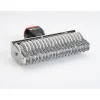
At Short Order Products, we offer two embossing machines, namely the Roovers T-10A and Roovers T-20. These hand manual embossing machines make it easy for you to emboss on metal strips and other suitable materials.
Make the Right Choice With Short Order Products
In conclusion, making your pick out of the best embossing machines at Short Order Products can seem like a big task at first. However, as you develop a good understanding of what you’re getting into, the path starts to appear much clearer than before. Thus, keeping the purpose in mind and the material you’ll emboss in mind, you can invest wisely in a quality embossing machine that suits your goals.
Skim through the choices, select the best from Short Order Products.
Place your order today.
FAQ’s
-
What are common book embosser mistakes?
The most common book embosser mistake is when you accidentally use a paper with the wrong thickness or unequal pressure, which causes the page to tear or face denting damage.
-
What is the difference between a top embosser and a bottom one?
At Short Order Products, an embossing machine isn’t the name of a machine that applies pressure from one side only. Rather, the top and bottom embossers work together to achieve the desired effect.
-
What does it mean by blind embossing?
The process of blind embossing refers to the practice of avoiding the use of ink, color, or foil layers. Essentially, the embossing is only done on the original surface of the material, allowing light and reflection to make its effect prominent.
-
What kind of paper works best for embossing?
In order to leave an embossing print on paper, it is important to consider heavyweight papers. The reason is that the texture would appear more prominent when using this type of paper, rather than a thin one.