Two batches leave the same production line on the same day. Both are shipped, but a defect later turns up in one. How do you tell them apart?
The cartons and preprinted labels look identical. The short code stamped on each package tells you which batch it came from. If the defect leads to a recall, that code could help limit it to one shift’s output rather than an entire week of shipments.
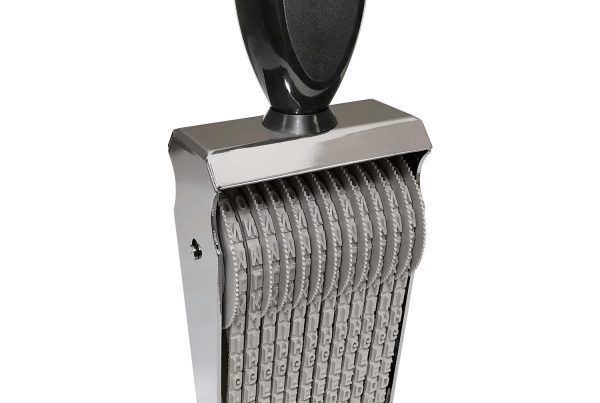
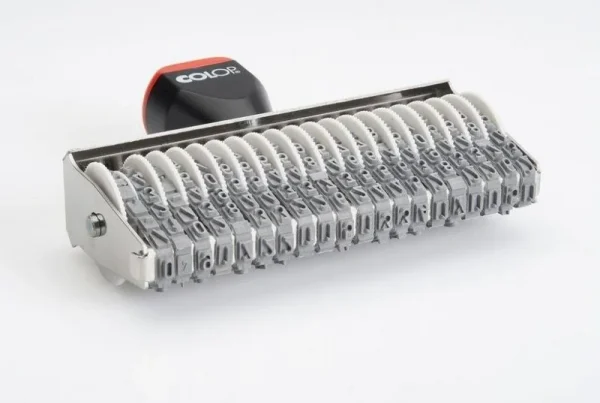
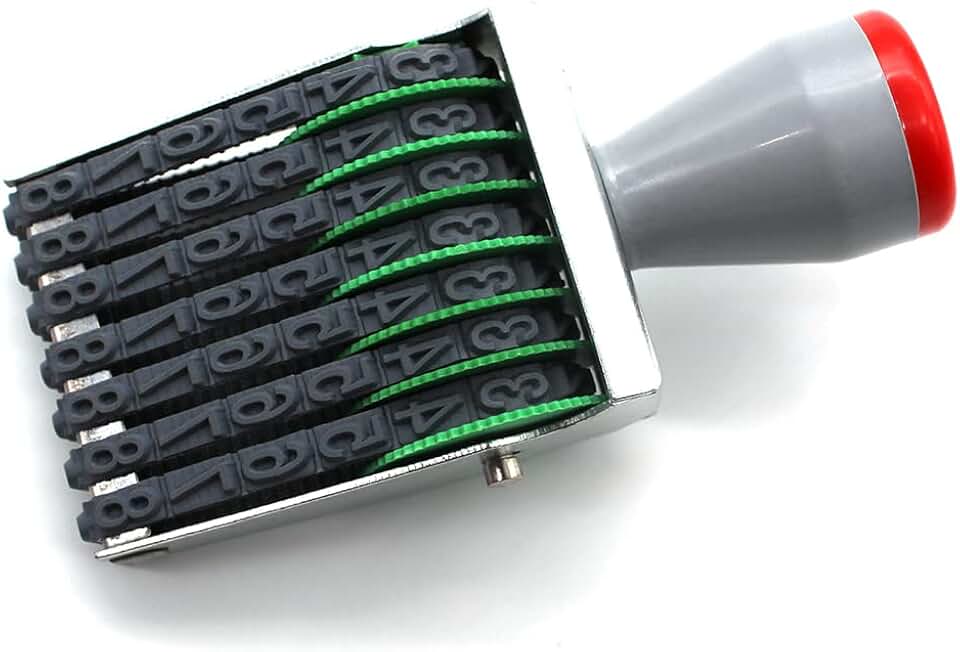
Operators use band stamps to mark each package with its assigned batch code. Before the next batch begins, they turn the bands to set the new code.
Here’s what we’ll cover:
- How batch numbers differ from lot numbers
- Code formats your team can read at a glance
- Changeover rules and five pre-release checks
What is the difference between batch numbers and lot numbers in manufacturing?
A batch is a defined quantity of material made under one manufacturing order during the same production cycle. A lot may cover that entire batch or a defined portion of it. Under the FDA’s drug manufacturing rules (21 CFR 210.3), a lot can also be a defined amount produced over a set period or quantity in continuous production.
The codes themselves are a different matter. Under that same FDA rule, batch number and lot number can both refer to an identifier used to trace a product’s manufacturing and distribution history.
Some plants use separate codes for the full batch and its smaller lots. Here’s how those compare with a serial number:
| Identifier | What it covers | Example | What it helps trace |
| Batch number | A defined production batch | 4471 | Products and records linked to that batch |
| Lot number | A full batch or an identified portion of one | 4471-2B | Products and records linked to that lot |
| Serial number | One individual unit | 000918 | The individual unit associated with the number |
Say one unit fails inspection. If it has a serial number, that identifies the defective unit. Its batch or lot code helps you trace other units that may be affected.
If the problem came from a shared ingredient mix, the entire batch may need to be held. But if one filling machine on line 2 caused the problem, separate lot codes and production records could help narrow the hold to the units that passed through it.
How can manufacturers structure batch and lot codes for easier identification?
Use the same order and number of characters for each code segment. For example, you can put the packing date first, followed by the line and shift. That way, operators know where to find each detail.
The format also needs to account for any coding requirements that apply to the product. For example, FDA rules for low-acid canned foods require the code to identify the packing facility, product, date, and packing period. Its inspection guide also notes that more detailed codes can reduce how much product needs to be recalled.
For a simple date-line-shift example, here’s how an eight-band code would look on a carton packed on November 25, 2026: 26329-2B.
| Segment | Stamped as | Bands used | What it tells you |
| Year | 26 | 2 | Packed in 2026 |
| Day of year (Julian date) | 329 | 3 | November 25, the 329th day of 2026 |
| Separator | – | 1 | Separates the date from the line and shift |
| Line | 2 | 1 | Packed on line 2 |
| Shift | B | 1 | Packed during shift B |
| Total | 26329-2B | 8 | Packing date, line, and shift |
This sample shows the packing date, line, and shift, but it doesn’t include all the information required for low-acid canned food coding. It may not identify a unique lot either. If line 2 packs more than one lot during shift B, those cartons could end up with identical codes. You’ll need a separate lot or run identifier to tell them apart.
Count characters before you order band stamps, because character height caps the band count. A 1/8-inch handheld number stamp takes up to 21 bands, but a 1-inch stamp stops at 7, one short of the code above. For shift codes, the letter bands leave out I and O, two letters that pass for 1 and 0 at a glance.
If your format also mixes plant letters with digits, our guide to letter-and-number codes shows when alphanumeric bands justify the upgrade.
Then run one honest test. Could your team trace a finished product back to its original production run using only its stamped lot number? If the answer leans on a supervisor’s memory, the code still needs another segment.
How do band stamps help distinguish one production run from another?
The rotating bands keep the same code in place until an operator changes the setting. The team can use that setting to mark cartons throughout a run without adjusting the bands.
Put two cartons from back-to-back runs side by side. Their packaging may look identical, but different stamped codes can show which run each came from. Operators can then match those codes to the correct production records.
Here’s what makes band stamps practical for batch and lot coding:
- The selected characters stay in place across repeated impressions, so even a long run doesn’t require resetting the code for every carton.
- When the assigned code changes, operators can turn the bands instead of replacing a fixed stamp plate or reprinting labels.
- Each alphanumeric band offers 38 characters, including a period and dash for separating code segments.
- Character heights range from 3/32 inch to 3/16 inch across the listed alphanumeric models, giving operators options for smaller cartons and labels.
Repeating one code works for batch identification, but serial numbering may require a different approach. If every unit needs its own serial number, a machine that advances automatically may be more practical. Our guide to numbering machines for traceability programs explains how those machines handle sequential numbering.
How should teams manage batch codes during production changeovers?
During a changeover, cartons carrying the old code can get mixed up with the next run’s output. Without a recorded stop time and a checked first impression, it can be difficult to tell exactly where one run ended and the next began.
If a customer later reports a defect, those details can help identify which cartons may be affected.
Here are 4 steps for resetting band stamps between runs:
- Record the previous code and its stop time, then clear leftover stamped cartons and labels from the line before starting the next run.
- Set the new approved code, checking every character, including date positions that may not need to change.
- Make a test impression, attach it to the batch record with the start time, and have a second person check it against the approved code.
- Check the first production impression, and hold any cartons with incorrect or unclear markings until their codes and run assignments are verified.
Food producers may also have specific deadlines for providing traceability records. Under the FDA’s Food Traceability Rule, covered businesses handling foods on the Food Traceability List must provide required records within 24 hours of an FDA request, unless the agency agrees to another reasonable timeframe. Congress has directed the FDA not to enforce that rule before July 20, 2028.
Separately, 21 CFR 113.60(c) allows packing-period codes for hermetically sealed containers of low-acid processed foods to change every 4 to 5 hours, at shift changes, or by batch, provided the batch doesn’t extend beyond one personnel shift.
5 checks to perform before releasing a batch with stamped identification
Before releasing a batch, inspect a sample of finished cartons for code accuracy, legibility, placement, and durability. Review the first and last impressions from the run, then record the inspection results in the batch record.
Drug manufacturers follow a related inspection requirement under 21 CFR 211.134. They must examine packaged products during finishing, visually check a representative sample for correct labeling afterward, and record the results.
Here are 5 checks to make before releasing the batch:
| Check | What to confirm | Red flag |
| Record match | Every character matches the approved batch code, including leading zeros and shift letters | A clearly printed code with the wrong date or shift |
| Full impression | Every character is complete and readable at the specified inspection distance | Faint edges, broken digits, or unclear characters |
| Placement | The code appears in the approved position on each sampled carton | Codes hidden by folds or printed in the wrong location |
| Ink set | The dried impression withstands the approved rub or handling check for that packaging material | Ink smearing or rubbing off during the check |
| Bookends | The recorded first and last impressions match the assigned batch code, alongside any required in-process checks | An old code appearing at the start or an incorrect code at the end |
The first two checks aren’t interchangeable. A code can print perfectly and still have the wrong batch number. That’s why you need to check the characters against the approved record, not just whether they’re easy to read.
Mark lot numbers consistently with band stamps from Short Order Products!
Short Order Products offers handheld and self-inking band stamps in standard and custom layouts, so you can mark each item in a batch with the same lot code.
Here’s how the starting prices compare:
| Band stamp type | Suitable for | Starting price |
| Small-character handheld band stamps | Labels and small cartons | $30.40 |
| Self-inking number stampers | Repeated marking with a built-in ink pad | $69.50 |
| Large-character handheld band stamps | Larger boxes and crates | $79.40 |
Letter bands cost an extra $15 per stamp, and self-inking models can also take a DATES band for the same charge. Custom-assembled self-inking stamps may take 5 to 10 working days to ship and cannot be returned, while eligible non-custom orders have a 15-day return window.
To confirm your stamp’s layout before placing an order, request a free quote with a sample lot code, your preferred character height, and the number of characters you need. Short Order Products can then help you choose a suitable model and band layout.
Frequently asked questions (FAQs)
Q1. Does one stamp handle both the date and the lot number?
Yes, as long as the stamp has enough bands for both. Self-inking number stampers can take letter bands or a DATES band in any position, while handheld models support letter bands. The bands can rotate to change the printed code, but you’ll need to choose where the date and lot number appear when setting up the layout.
Q2. Which ink works in a self-inking number stamper?
Use regular rubber stamp ink from any brand. These self-inking stampers ship with dry pads, so you’ll need to ink the pad before its first use. Short Order Products also warns against numbering machine ink, pre-inked stamp ink, and ink used in shipping departments. After inking the pad, make a test impression before marking the next batch.
Q3. Do ink-stamped lot codes last on metal parts?
That depends on the ink and how the parts are handled. Ink-stamped codes sit on the metal’s surface, where heat treatment, solvent cleaning, and abrasion can wear them away. If you need a more durable mark, metal stamps indent the code into the part instead. Short Order Products offers options for softer metals like copper and aluminum, as well as harder metals like steel and stainless steel.
Q4. What character size should a stamped lot code use?
Choose the character height based on the available marking space and how far away the code needs to be read. Small-character handheld models range from 3/32 inch (about 6 point) to 1/4 inch for labels and small cartons. Large-character models range from 3/8 inch to 1 inch for boxes and crates. The number of bands matters too, since longer codes need more space across the marking surface.