Every “Why can’t anyone read this anymore?” moment on a plant floor comes down to the same problem: equipment identification only works when the information remains readable. Printed labels fade under sunlight, stickers peel off inside the wash bay, and plastic markers crack long before the machine wears out.
Because of that, plants turn to engraved metal tags for equipment identification, asset tracking, maintenance records, safety notices, and full traceability. However, choosing a metal tag does not guarantee durability, because material grade and workmanship determine how well the marking holds up.
That is why careful buyers look beyond the tag itself – considering the material grade, marking depth, size, and mounting method before placing an order.
What Is an Industrial Metal Tag?
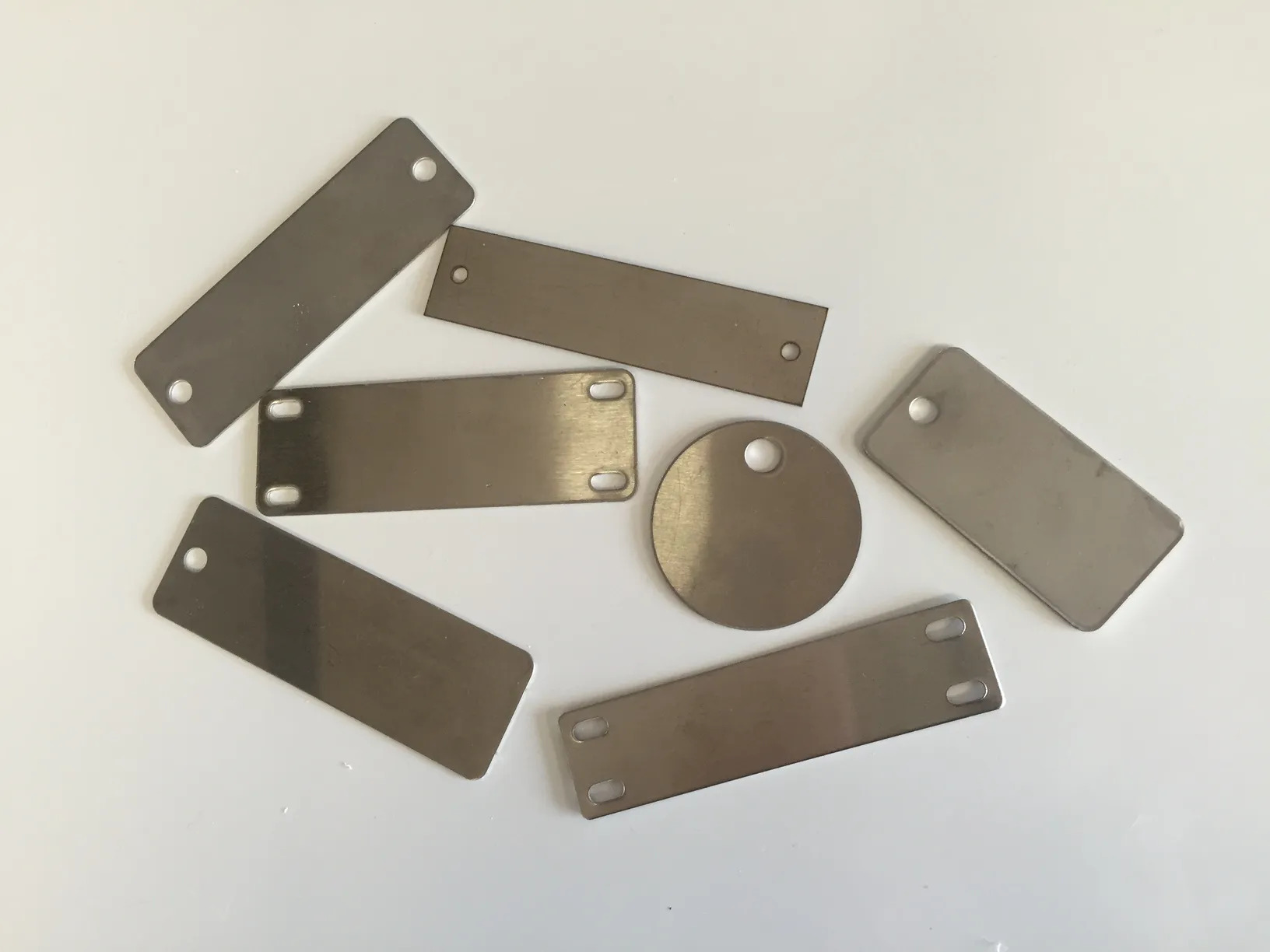
An industrial metal tag is a stamped or engraved plate made of aluminum, brass, or stainless steel that contains identification data for equipment, parts, and assets within working facilities.
Unlike a paper label, such a tag retains its markings in the face of heat, moisture, chemicals, and constant handling. That durability matters during an equipment audit when half the printed labels no longer match the asset register. Even so, the tag does not track anything on its own, because its value depends on the code on its face and the system used to read it.
Here are 6 jobs these tags handle across daily operations:
- Safety and operational information
- Maintenance identification
- Equipment identification
- Inventory management
- Part identification
- Asset tracking
Beyond the job itself, the surroundings narrow the specification, so here are 7 settings where these tags do steady work:
- Utilities
- Construction
- Warehousing
- Manufacturing
- Transportation
- Industrial facilities
- Equipment and machinery
8 Characteristics of a High-Quality Industrial Metal Tag
A high-quality industrial metal tag depends on the correct base metal, deep permanent marking, exact dimensions, and mounting that suits the asset. Each characteristic (of metal tags) affects how long the identification lasts – and together they lead to the 8 points:
1. The right material for the application
The application determines the right material, not the price list since the wrong metal can fail even with high-quality marking. 3 material-to-application matches work well in practice.
- Aluminum suits indoor equipment and general asset numbering
- Stainless steel suits food plants, refineries, and marine work
- Brass works for valve markers, control panels, and utility labels
2. Durable and long-lasting construction
Durable construction matters most at the weakest points, mainly the mounting hole and the rim. Thin stock bends there, while rough edges can lead to cracks. Because of that, sturdy tags share 3 construction details:
- Heavier gauge stock resists bending on vibrating equipment
- Rounded or notched corners stop snagging during handling
- Reinforced hole areas hold their shape under pull
3. Clear and permanent marking
Permanent marking withstands plant conditions, helping the characters on quality metal tags remain readable through paint overspray, degreasers, and years of scrubbing. Cut characters hold up under those conditions while printed ones fade. 3 finishes lock the marking in:
- Engraved characters keep their edges through solvent cleaning
- Acid-oxidized engraving darkens the engraving so contrast never fades
- Stamped depth keeps numbers legible after surface wear
4. Resistance to the intended environment
Resistance means choosing a tag that suits the exact mix of heat, moisture, sunlight, and chemicals around it. When the material meets those conditions, the identification remains legible throughout the asset’s full service life. In practice, 3 pairings cover most settings:
- Anodized aluminum keeps its finish under constant sunlight
- Lacquered finishes guard against mild chemical splashes
- Stainless steel handles steam, salt spray, and washdowns
5. Readability at the required distance
Readability depends on character height, contrast, and finish. Someone reading from across an aisle needs taller characters than an inspector holding the tag up close. 3 choices help keep the tag readable at different distances.
- Taller characters improve overhead and long-distance reading
- Strong contrast between character and background stays clear at a distance
- Matte finishes cut glare under direct plant lighting
6. Accurate and consistent manufacturing
Consistency matters most as order volume increases because hole positions and dimensions can vary with low-quality tooling. Installation then slows down, and scanners start misreading codes. That consistency shows up in 3 visible ways:
- Identical hole placement speeds up batch installation
- Matched character height keeps a whole batch uniform
- Repeatable dimensions fit standard brackets and fixtures
7. Appropriate mounting and attachment options
Mounting depends on the surface and on whether the tag needs to stay with the asset. Flat panels accept screws or adhesive, while pipes and valves need ties or hooks. Most assets use one of 3 mounting options.
- Drilled holes accept screws, rivets, wire, and S-hooks
- Adhesive backing suits smooth panels and control boxes
- Cable ties and band seals grip pipes and lines
8. Customization that matches the identification requirement
Customization matters because stock sizes rarely meet every requirement in one facility. Special shapes, layouts, logos, and serial ranges allow a single tag to carry all the information the maintenance team tracks. Most custom work comes down to 3 options:
- Custom sizes fit tight mounting spaces on machinery
- Sequential numbering supports asset registers and audits
- Logos and part codes share one tag face
How Metal Tag Material Affects Quality and Performance
Material affects performance because it determines corrosion resistance, marking depth, and service life. Even the best marking method cannot compensate for metal that rusts in its surroundings. 3 metals cover almost every industrial job so here is how each one is affected:
- Aluminum Metal Tags: Aluminum remains lightweight and engraves cleanly which keeps costs down across large numbering runs.
- Stainless Steel Metal Tags: Stainless steel offers the strongest corrosion resistance of the 3 so it withstands the harshest environments.
- Brass Metal Tags: Brass stamps cleanly and holds a bright finish longer than untreated aluminum.
What Makes Metal Tag Marking High Quality?
High-quality marking stays clear, holds its depth, and repeats consistently across the batch. 5 signs point to that quality:
- Marking depth affects permanence as deeper cuts withstand abrasion and cleaning.
- Engraving cuts characters into the metal, while stamping presses them into it.
- Character clarity lasts when edges stay sharp after years of handling.
- Consistent results across multiple tags come from uniform depth on every piece.
- For serial numbers and asset IDs, spacing must remain clear enough for scanners to read
How Tag Size and Design Affect Industrial Usability
Size and design affect usability because they decide what information fits, how far away someone reads it, and whether the tag fits within available mounting space. A cluttered tag face is hard to read while an oversized plate may not align with the holes already drilled for mounting. 5 design choices shape daily usability:
- Choosing the Right Tag Dimensions: Match the footprint to the data it contains and the available mounting space.
- Matching Tag Size to Available Mounting Space: Measure the flat area on the asset before ordering.
- Character Size vs Information Density: Fewer characters at a larger height are easier to read than cluttered text at smaller sizes.
- Hole Placement and Mounting Requirements: Keep holes clear of the marked area so fasteners do not cover the identification (or information).
- Single-Sided vs Double-Sided Identification: Two-sided marking suits hanging tags that rotate on valves and cables.
High-Quality Metal Tags vs Low-Quality Identification Tags
The gap between high-quality metal tags and poor-quality ones appears after a year in service, not on delivery day. Here are 8 differences that separate them in practice:
| Factor | High-quality metal tags | Low-quality tags |
| Material | Solid aluminum, brass, steel | Thin plated stock |
| Marking | Engraved or stamped | Printed surface ink |
| Weather | Holds up outdoors | Fades within months |
| Chemicals | Resists solvents | Wipes off |
| Edges | Deburred and rounded | Sharp and uneven |
| Consistency | Uniform batches | Varies per tag |
| Mounting | Reinforced holes | Holes tear out |
| Lifespan | Many years | Frequent replacement |
Factors to Consider Before Choosing the Right Metal Tag for Your Application
Choosing the right metal tag comes down to 8 decisions about the job’s application, the setting, and the physical build. And each narrows the options toward the right specification. Skipping any of them usually costs more than the tags themselves because a wrong material means a second order weeks later. Here are the 8 factors to consider before ordering:
- Application: Decide whether the tag identifies equipment, parts, inventory, or a safety condition.
- Environment: List the heat, moisture, chemicals, and sunlight the tag will be exposed to daily.
- Material: Choose aluminum, brass, or stainless steel based on the conditions the tag will face.
- Information: Write out every character the tag must carry, codes included.
- Marking: Choose engraving for fine detail or stamping for deeper impressions.
- Dimensions: Measure the mounting surface, then size the tag to fit it.
- Attachment: Select holes, adhesive backing, cable ties, or hooks to match the mounting surface.
- Quantity: Calculate how many you need now then add spares for assets added later.
Get Your Metal Tag from Short Order Products Today!
Everything above narrows to few decisions you now understand: metal, marking, dimensions, and attachment. Once these choices are clear, the next step is finding a supplier that can handle them together.
That’s where Short Order Products comes in. We offer laser and rotary engraving on aluminum, brass, and stainless steel, plus blank metal tags for crews that prefer to mark them in-house.
Those options come with small minimum orders and quick turnaround, from a dozen valve tags to a full asset numbering run.
Send your specifications and get your custom quote today!
Frequently Asked Questions (FAQs)
Q1. What industries use metal asset tags?
Manufacturing, construction, utilities, warehousing, and transportation rely on them most. Beyond those, any operation tracking equipment or maintenance history uses metal tags to etch records/information onto the asset.
Q2. Can metal tags be customized for different industries?
Customization covers size, shape, material, character layout, logos, serial ranges, and hole placement. That flexibility lets one metal tag design adapt from a food plant to an oil field without sacrificing readability.
Q3. What are industrial tags?
Industrial tags are durable identification plates that crews attach to equipment, parts, and inventory inside working facilities. They carry names, numbers, codes, and safety notes, with markings that withstand heat, moisture, and daily handling.
Q4. How long do metal tags usually last?
Stainless steel and anodized aluminum tags stay readable outdoors for well over a decade while indoor tags can often outlast the equipment itself. That lifespan depends mainly on marking depth and material choice.